
Trees
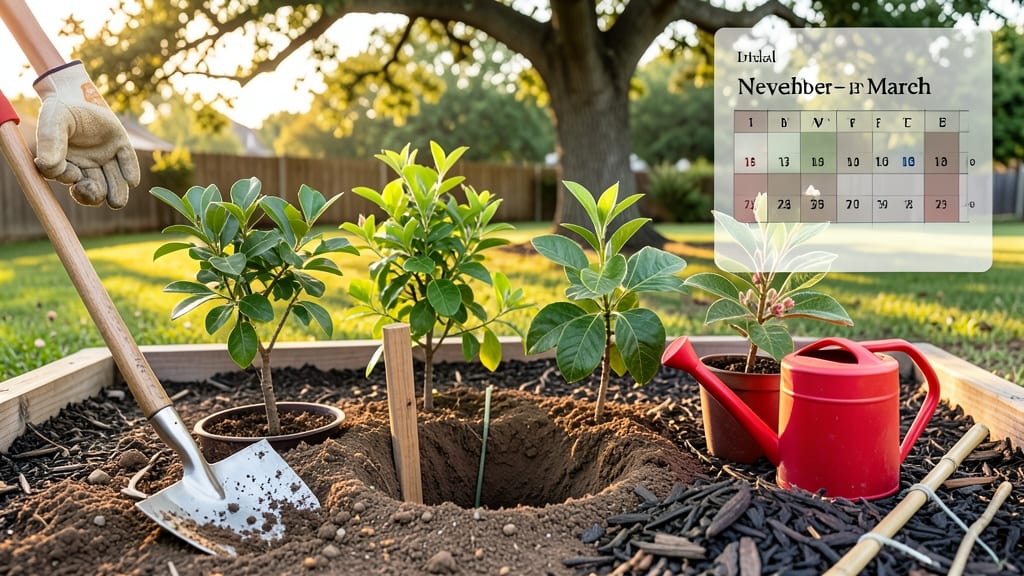
Timing your fruit tree planting in Southern California can feel like playing a high-stakes game of chance—get it wrong, and you risk stunted growth or even losing your young trees to unexpected heat or frost.
The key isn’t just picking a season; it’s reading your microclimate like a pro to give your 🌱 the best shot at thriving.
If you’ve ever wondered why some gardeners in coastal areas plant months earlier than those inland, it’s not just luck—it’s science. Southern California’s diverse zones mean what works in San Diego might fail in Palm Springs.
I’ll break down the exact windows that separate success from disappointment, so you can stop guessing and start growing.
From container-grown saplings to in-ground plantings, we’ll cover everything you need to know about soil warmth, rainfall timing, and even how elevation affects your tree’s survival. Whether you’re a first-time gardener or a seasoned orchard keeper, these insights will help you plant with confidence.
Ready to turn your backyard into a fruit-bearing paradise? Let’s dive into the perfect planting months that work with Southern California’s quirks—not against them.
Southern California fruit tree planting calendar by microclimate zones
Southern California’s diverse microclimates—from frost-free coastal areas to inland deserts and valley regions—create wildly different planting conditions for fruit trees. Timing is everything, as a tree planted too early faces winter stress, while one planted too late struggles with summer heat.
The key is matching your zone to the 100-day rule: plant when there are at least 100 days of warm weather ahead to establish roots before summer drought hits.
Coastal areas like San Diego and Santa Barbara (USDA zones 10-11) enjoy zero frost risk, allowing year-round planting with peak success in late winter to early spring.
Meanwhile, inland valleys like Los Angeles and Riverside (zones 9-10) experience mild winters and benefit from fall planting to avoid summer heat stress. Desert regions near Palm Springs (zone 10) demand immediate watering after planting to combat extreme heat.
Here’s how to align your planting with Southern California’s three core microclimates—each with its own frost risk, soil temperature, and irrigation needs.
For container-grown trees, you can plant year-round in coastal zones, but bare-root trees (dormant) should follow the 100-day rule. In desert areas, avoid planting in July/August—even drought-tolerant trees like figs need time to acclimate before summer’s 110°F+ soil temps.
Pro tip: Use a soil thermometer to confirm 60°F+ soil temps before planting. Coastal gardeners can push planting to early April, while inland areas should finish by late March to avoid summer stress. Citrus trees are an exception—they thrive with fall planting (Sept–Oct) to establish roots before winter rains.
Remember: Dwarf varieties (like Citrus ‘Calamondin’ or Peach ‘Bonanza’) establish faster than standard trees, making them ideal for small spaces or urban gardens. If you’re unsure about your microclimate, check local frost data from the USDA Plant Hardiness Zone Map or your cooperative extension office.
Once planted, mulch heavily (4–6 inches of wood chips) to retain moisture and regulate soil temperature. In desert regions, drip irrigation is non-negotiable—hand-watering simply can’t match the consistency needed for young trees.
🌱
Critical factors that determine your fruit tree’s survival in Southern California
Southern California’s microclimates can turn a fruit tree planting into a high-stakes gamble if you ignore key factors. Unlike cooler regions, our zero-frost zones and heat spikes demand precision—soil temperature, rainfall timing, and elevation shifts all play critical roles.
For example, coastal areas like San Diego can plant earlier than inland deserts, where summer heat arrives weeks sooner. Understanding these variables ensures your young tree establishes strong roots before summer stress hits.
One of the most critical rules I follow is the "100-day rule"—a buffer period that prevents young trees from struggling during peak summer heat. If you plant too late, your tree may not have enough time to develop deep roots before temperatures soar.
This is especially true for container-grown trees, which need extra time to adjust to outdoor conditions. Let’s break down the non-negotiables that separate thriving orchards from failed plantings.
Soil temperature is your first clue. Fruit trees need warm soil (60°F+) to thrive, but planting too early in cold soil can stunt root growth. In Southern California, this typically means waiting until mid-February for inland areas and late January for coastal zones.
Use a soil thermometer to check—if it’s below 60°F, wait a few more weeks. Cold soil slows microbial activity, which is essential for root development.
Rainfall patterns are another game-changer. Coastal regions like Malibu get consistent winter rains, while desert areas like Palm Springs rely on irrigation. If you plant during drought conditions, your tree will struggle to establish roots.
Aim to plant when natural rainfall is predictable—usually between November and March—or supplement with drip irrigation if needed. Young trees need 1-2 inches of water per week during their first year.
Elevation shifts can drastically alter your planting timeline. Trees planted in higher elevations (e.g., Big Bear) may experience cooler nights, delaying the ideal planting window by 2-4 weeks compared to sea-level areas.
Always adjust your schedule based on your specific elevation—even a 1,000-foot difference can change the game. Check local USDA hardiness zone maps (typically 9b-11 for SoCal) to fine-tune your approach.
🌱
🌱 Summary Table: Critical Factors for Southern California Fruit Tree Survival
| Factor | Southern California Specification | Actionable Tip |
|---|---|---|
| Soil Temperature | 60°F+ (mid-Feb inland, late Jan coastal) | Use a soil thermometer; wait if below 60°F. |
| Rainfall Timing | Nov-Mar (coastal); supplement irrigation inland | Aim for 1-2 inches water/week in first year. |
| Elevation Adjustments | Higher = 2-4 weeks later (e.g., Big Bear vs. LA) | Check USDA zone maps for local variations. |
| 100-Day Rule | Plant early enough for roots to establish before summer heat | Count backward from your area’s first 90°F+ day. |
| Container vs. In-Ground | Container trees need 2-4 extra weeks of acclimation | Hardening off is critical—gradually expose to outdoor conditions. |
Don’t overlook the container vs. in-ground debate. Container-grown trees (like those from nurseries) need extra time to adjust to outdoor conditions. I always recommend hardening off container trees for 2-4 weeks before planting—gradually exposing them to sunlight, wind, and temperature fluctuations.
Skip this step, and your tree may shock and fail to thrive. For in-ground plantings, focus on well-draining soil and avoid compacted clay, which can suffocate roots.
Finally, watch for heat spikes after planting. Even in zero-frost zones, sudden temperature jumps can stress young trees. Mulch heavily (3-4 inches of organic mulch) to retain moisture and regulate soil temperature. Pair this with drip irrigation to deliver water directly to the roots, reducing evaporation.
With these factors in check, your fruit tree will have the best shot at surviving Southern California’s quirks—and thriving for years to come.