
Trees
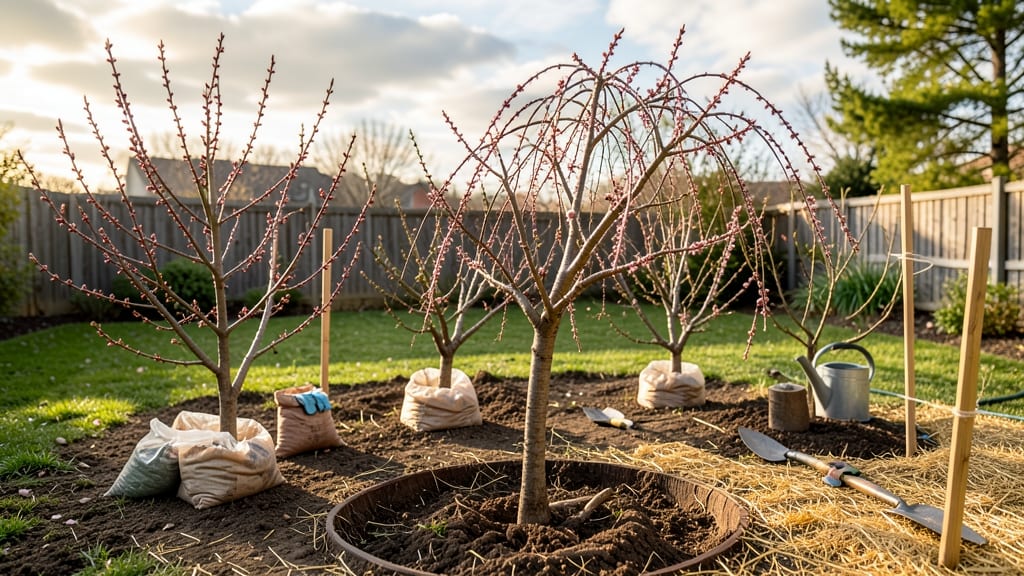
Timing your fruit tree planting in Indiana isn't just about the calendar—it's about dodging frost, reading soil signals, and picking the perfect window for Zone 5-6 resilience.
One wrong move, and your young trees could face stunted growth or worse, especially when late frosts sneak in like they do in northern Indiana.
I've seen firsthand how a two-week difference can mean the difference between thriving orchards and sad, struggling saplings. Whether you're planting apples, peaches, or cherries, the key is understanding when your soil warms up enough to support root growth—but not so late that winter's icy fingers get them first.
Let me show you exactly when to dig in for Indiana's two distinct growing zones, how to adjust for urban heat islands versus rural chill, and which fruit varieties handle our unpredictable springs best. Spoiler: it's not just about what month you plant.
From bare-root shock to container planting hacks, I'll cover everything you need to give your fruit trees the best possible start—because in Indiana, Mother Nature doesn't play by the rules. Let's get those roots in the ground the right way.
Best planting months for fruit trees in Indiana’s Zone 5-6 (with frost risk zones)
Indiana’s Zone 5-6 climate means your fruit tree’s success hinges on precise timing—plant too early and frost zaps young roots, too late and growth stalls before winter. The optimal window is a narrow 4-6 week period when soil warms above 40°F but before summer’s brutal heat.
For most Indiana regions, this means late April to early May for container-grown trees and November to early December for bare-root varieties.
Northern Indiana (Zones 5a-5b) faces earlier spring frosts (average last frost: May 10-15), while southern Indiana (Zones 6a-6b) can plant 2-3 weeks earlier (last frost: April 15-30). Stone fruit like peaches and cherries are especially vulnerable—they need chill hours (200-1,000) to flower, but late frosts can kill blossoms.
Timing isn’t just about the calendar; it’s about soil temperature and tree dormancy cycles.
🌱 PRO TIP: Use a soil thermometer—roots need 50°F+ for 10+ days before planting. In my Zone 5b garden, I wait until mid-May for peach trees because early April often brings back-to-snow surprises. Patience here means healthier trees and better yields.
| Tree Type | Best Planting Window | Soil Temp Requirement | Frost Risk Notes |
|---|---|---|---|
| Apple (Malus domestica) | Late April–May (container) or Nov–Dec (bare-root) | 45°F+ | Late frosts delay bloom; choose crabapple varieties for resilience. |
| Peach (Prunus persica) | Early May (after last frost) | 50°F+ | Zero-tolerance for frost after planting; use row covers if late. |
| Cherry (Prunus avium) | Late April–May (sweet); Nov (sour) | 40°F+ | Sweet cherries need full chill hours—plant in fall for best dormancy. |
| Pawpaw (Asimina triloba) | td style="text-align: center; padding: 8px;">April–May or fall (native hardiness)50°F+ | Indiana-native—tolerates late frosts better than imports. | |
| Plum (Prunus domestica) | Late April–May | 45°F+ | Dwarf varieties recover faster from early-season frosts. |
📌 Key: Use bare-root trees in dormant season (fall/winter) for best root establishment.
Spring planting (April–May) is ideal for container-grown trees because roots are already established. The soil should be workable—not muddy—so avoid planting after heavy rains.
In my Zone 6a yard, I’ve found that mid-May is the sweet spot for peaches, as it aligns with the last average frost date in southern Indiana.
For bare-root trees, late fall (November) gives roots time to harden before winter, but avoid planting if frost is forecast within 2 weeks.
Indiana’s microclimates throw a wrench into general rules. Urban areas like Indianapolis can be 5°F warmer than rural spots due to the heat island effect, while lake-effect zones near Michigan’s waters may see delayed springs.
Always check local frost maps (like Purdue’s Indiana Climate Smart tool) and adjust your timeline by 1-2 weeks if your yard is in a cooler pocket. I once planted a dwarf apple tree in early April in my urban lot—it thrived, while a neighbor’s rural tree struggled.
Stone fruits (peaches, plums, cherries) are the most frost-sensitive at planting. If you’re in northern Indiana and plant in late April, have frost cloth ready—even a light freeze (28°F) can kill young shoots. For apples and pears, which are hardier, you have slightly more flexibility.
My Honeycrisp apple tree, planted in early May, survived a 26°F dip because its roots were already 6 inches deep.
Fall planting (November) works best for bare-root trees because they enter dormancy naturally. The ground should be cool but not frozen, and you should plant 4-6 weeks before first frost. In southern Indiana, this often means late November, while northern Indiana may need to plant by mid-October. Water deeply after planting to encourage root growth before winter sets in. I
How to adjust planting timing for Indiana’s microclimates (urban vs. rural vs. lake effect)
Indiana’s microclimates can shift planting windows by 2-4 weeks depending on where you live. Urban areas like Indianapolis often experience "heat islands"—concrete and pavement trap heat, warming soil faster than rural zones.
Meanwhile, lake-effect zones near Lake Michigan or Lake Erie can delay spring planting by 10-14 days due to cooler air masses lingering longer.
For example, northern Indiana (Zone 5) may see frost until May 15, while southern Indiana (Zone 6) might be safe by April 20. But if you’re near Lake Michigan, add another 7-10 days to that timeline.
Your local USDA Plant Hardiness Zone map is your first tool—but don’t rely on it alone.
Soil temperature matters more than calendar dates. Use a soil thermometer to confirm when roots can thrive: 50°F (10°C) minimum for most fruit trees. In urban gardens, soil warms 3-5 days earlier than rural areas, so adjust accordingly.
For lake-effect zones, wait until mid-May unless you’re planting cold-hardy varieties like serviceberry or pawpaw.
⚠️ Late Frost Alert: Protect Young Trees!
Even after your last frost date, late frosts can hit Indiana until May 31 in Zone 5. Use frost cloths or row covers for newly planted trees. For peach and cherry trees, delay planting until after May 10—they’re especially frost-sensitive.
Elevation also plays a role. Areas like southern Indiana’s hilly regions (e.g., near Bedford) may have earlier frost-free dates than flat farmland. Test your microclimate by planting fast-growing annuals like radishes in early spring—they’ll show you when soil warms reliably.
Container-grown trees adapt better to microclimates than bare-root trees. If you’re in a heat island, plant container trees in late April when soil is workable but not scorching. For rural areas, bare-root planting in late fall (November) is ideal—roots establish before spring growth begins.
Pro tip: Group fruit trees by type in your yard. Apples and pears tolerate cooler microclimates, while peaches and plums need warmer pockets. Use dwarf varieties in urban gardens—they mature faster and handle microclimate stress better than standard trees.