
Trees
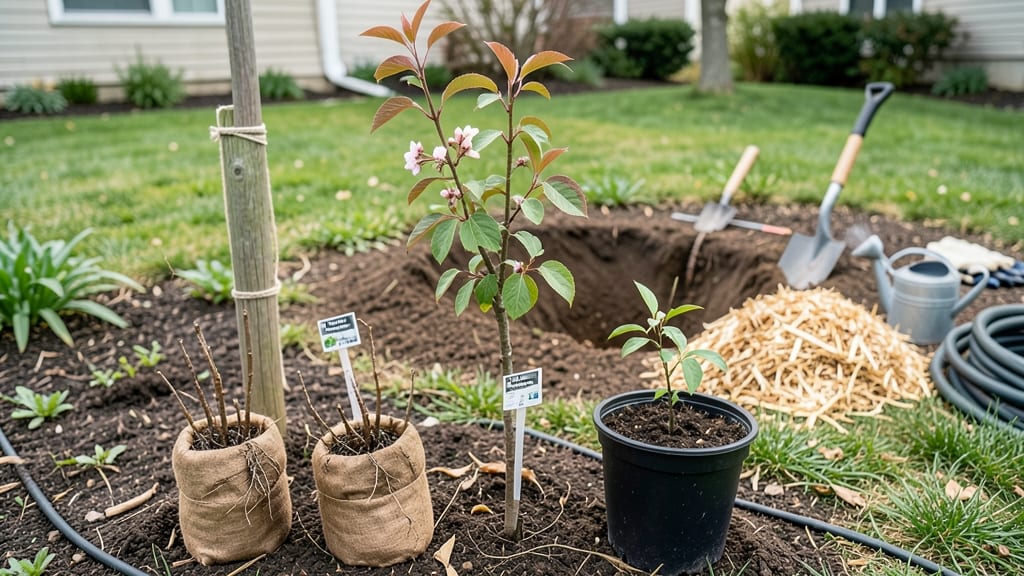
Timing your fruit tree planting in Washington isn’t just about picking a spring month—it’s about matching your variety to the chill-hour zones that define the state’s diverse climate.
Whether you’re in the rain-soaked western valleys or the frost-prone eastern plains, planting too early or too late can mean the difference between a thriving orchard and years of disappointment.
I’ve seen firsthand how Washington’s microclimates—from the maritime Pacific Northwest to the continental interior—create wildly different growing conditions. Apples in Zone 5 need a late-winter start, while cherries in Zone 8 thrive when planted in early spring.
The key? Understanding how chill hours interact with your local frost patterns to give your trees the best shot at fruiting.
In this guide, I’ll break down the exact planting windows for Washington’s most popular fruit trees, including soil prep tips and frost-risk strategies tailored to your region. You’ll learn which varieties work best where, how to time your planting for maximum success, and even where to turn for local expertise.
Ready to plant with confidence? Let’s dive into the chill-hour matching system that’ll help you grow fruit trees that actually bear fruit—year after year.
Washington’s fruit tree planting timeline by chill-hour zones (map + variety guide)
Washington’s diverse climate—from the maritime west to the continental east—creates distinct chill-hour zones that dictate when to plant fruit trees. Unlike many states, timing isn’t just about seasons but matching chill-hour requirements to your specific zone.
For example, Zone 5 (eastern WA) needs 900+ chill hours, while Zone 8 (western WA) thrives with 400-600 hours. Planting outside these ranges risks poor fruit set or no harvest at all.
Bare-root trees are best planted in late winter or early spring (February–March), when they’re still dormant but soil is workable. Container-grown trees can go in until May, but avoid spring planting in frost-prone areas like the Columbia Basin.
The key is planting before buds swell—typically 4-6 weeks before last frost—to let roots establish before active growth begins.
Here’s the critical rule: Never plant in fall unless you’re in Zone 8 or 9 (western WA). Fall planting risks winter heaving (frost pushing roots up) and insufficient root establishment before dormancy. For Zone 5-7, stick to February–March for bare-root trees or April–May for potted varieties.
| Zone | Chill Hours | Best Planting Window | Top Varieties | Avoid Planting After |
|---|---|---|---|---|
| Zone 5 (Eastern WA) | 900+ | Feb–March (bare-root) | ‘Envy’ apple, ‘Starking Delicious’ cherry | April 15 (frost risk) |
| Zone 6 (Cascade Foothills) | 600–800 | March–April | ‘Honeycrisp’ apple, ‘Lapins’ pear | May 10 |
| Zone 7 (Western WA) | 400–600 | April–May (potted) | ‘Fuji’ apple, ‘Rainier’ cherry | June 1 |
| Zone 8 (Coastal WA) | 300–400 | Oct–Nov (fall) or Feb | ‘Gala’ apple, ‘Satsuma’ orange | Dec 15 (frost) |
*Chill hours = hours below 45°F (7°C) needed for dormancy. Source: WSU Extension.
Microclimates add another layer of complexity. For instance, Puget Sound’s Zone 8 can safely plant in fall or early spring, while Yakima’s Zone 5 requires late winter dormancy planting.
Always check last frost dates: Western WA averages March 15, but Eastern WA can see frost until May 1 in valleys. Use WSU’s frost map to pinpoint your exact risk zone.
Soil temperature matters just as much as air temperature. Plant when soil reaches 45°F (7°C)—use a soil thermometer to check. In Zone 5-6, this is usually late February; in Zone 7-8, it’s March–April.
Cold soil slows root growth, so don’t rush. Amend clay soils with compost to improve drainage, and mulch heavily (3–4 inches) to protect roots from temperature swings.
Pro tip: Bare-root trees should have their roots submerged in water for 1–2 hours before planting to revive them. For container-grown trees, remove the pot and loosen roots if they’re circling.
Plant at the same depth as they were in the nursery—never deeper—to avoid suffocation. Stake young trees in windy areas (common in Eastern WA) to prevent uprooting.
After planting, deep-water the tree (1–2 gallons) and keep soil moist for the first 4–6 weeks. Avoid fertilizing until spring growth begins—too much nitrogen now encourages suckers (weak shoots) instead of root development. In Zone 5-6, a light 10-10-10 fertilizer in May kickstarts growth without stressing the tree.
Remember: Patience is key. Fruit trees planted in optimal windows may take 3–5 years to bear fruit, but proper timing ensures they’ll thrive. For Zone 8 growers, consider low-chill varieties like ‘Anna’ apple or ‘Satsuma’ orange to bypass dormancy issues entirely.
Always source Washington-adapted nursery stock—local varieties handle our climate better than generic options.
🌳
Critical mistakes to avoid when planting fruit trees in Washington’s microclimates
Washington’s diverse climate means that planting fruit trees in the wrong season—or ignoring local conditions—can lead to failed crops. I’ve seen young trees struggle or even die because of timing errors or soil mismatches.
The biggest mistake? Planting too early in frost-prone areas, especially in Eastern Washington’s Zone 5 or 6, where late frosts can kill tender roots.
Another common error is ignoring chill-hour requirements. For example, planting a peach tree in Western Washington’s milder Zone 8 without verifying its chill needs (typically 500-700 hours) will result in poor fruit set. Always match your tree to your zone’s cumulative winter chill.
Here’s what NOT to do—and how to avoid these pitfalls in Washington’s unique growing conditions:
⚠️ Eastern WA Warning
Planting in spring (March-April) risks late frosts that can damage new growth. Wait until after April 15 in Zone 5-6 areas.
⚠️ Western WA Warning
Bare-root trees planted in wet soil (common in winter) rot quickly. Amend clay soils with compost and plant on sloped beds for drainage.
Stone fruits like cherries and plums need well-draining soil with a pH of 6.0-6.5. Skipping a soil test in acidic Western WA soils (common in Puget Sound) can stunt growth. Always test before planting—it’s a 5-minute fix that saves years of frustration.
Wind exposure is another silent killer. In open fields of Central Washington, young trees need windbreaks (like tall shrubs or fences) to prevent desiccation. Without protection, leaves dry out, and roots struggle to establish.
Finally, avoid planting container-grown trees in summer’s heat. Their roots are stressed, and transplant shock kills them. Stick to bare-root trees in late winter or container-grown trees in early spring when soil is cool but workable.
By avoiding these mistakes—and paying attention to your local microclimate—your fruit trees will thrive, not just survive. Washington’s climate is challenging, but with the right timing and care, you’ll be harvesting fruit in 3-5 years instead of waiting decades.