
Plants
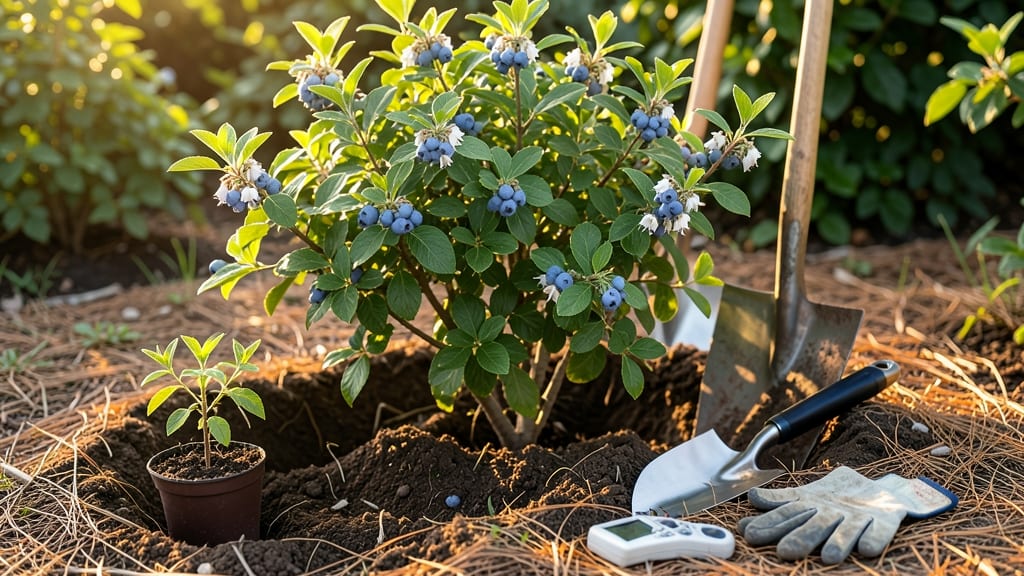
Timing your blueberry bush 🫐 planting in North Carolina isn't just about the calendar—it's about matching your variety to the region's chill hours and microclimates for that perfect harvest. Get it wrong, and you might end up with sparse berries or bushes struggling to thrive in your backyard.
Whether you're in the Piedmont's rolling hills or the Coastal Plain's warmer zones, understanding when to plant makes all the difference. The right window ensures your bushes establish strong roots before summer heat arrives, setting you up for years of juicy harvests instead of disappointment.
I'll walk you through the ideal planting windows for both fall and spring, plus how to prepare your soil for these acid-loving shrubs. You'll learn which varieties thrive best in your specific NC zone and how to tell if you're planting too early or late.
Let's get your blueberry bushes 🫐 off to the right start—because patience now means bigger rewards later! Whether you're a first-time gardener or a seasoned pro, these insights will help you grow healthier, more productive bushes that deliver that sweet-tart flavor you crave.
NC blueberry planting zones: chill-hour requirements by variety
North Carolina’s diverse climate means not all blueberry varieties thrive equally. The key to success? Matching your chill-hour requirements to your region. Southern Highbush varieties need 200–400 chill hours, while Rabbiteye types require 600–1,000 hours.
Coastal NC (Zone 8a) typically gets 300–500 chill hours, while the Mountains (Zone 6b) see 800–1,000 hours. Choosing the wrong variety can lead to poor flowering or no fruit at all.
For example, if you’re in the Piedmont region (Zone 7a–7b), Southern Highbush varieties like ‘Duke’ or ‘Tifblue’ are ideal—they get enough chill hours to produce reliably. In contrast, Rabbiteye varieties like ‘Climax’ will struggle in the Coastal Plain but excel in the Mountains.
Always check your last frost date (e.g., March 15 in Raleigh) to align planting with dormancy cycles.
Here’s how NC’s 7 key regions break down for blueberry planting:
| Region | Chill Hours | Best Varieties | Ideal Planting Window |
|---|---|---|---|
| Coastal Plain (Zone 8a) | 300–500 hrs | Southern Highbush (e.g., ‘Peach Sorbet’) | Late Feb–April or Sept–Oct |
| Piedmont (Zone 7a–7b) | 500–700 hrs | Half-High (e.g., ‘Chester’) | Late Nov–Feb |
| Mountains (Zone 6b) | 800–1,000 hrs | Rabbiteye (e.g., ‘Powderblue’) | Sept–Oct or early spring |
*Chill hours = # of hours below 45°F needed for dormancy.
If you’re unsure about your chill-hour total, check your local Cooperative Extension Service or use a weather station app to track winter lows. For example, Asheville’s 900+ chill hours make it perfect for Rabbiteye varieties, while Wilmington’s 400 chill hours limits you to Southern Highbush types.
Planting outside these ranges risks poor fruit set or stunted growth.
Another critical factor is soil acidity. Blueberries demand a pH of 4.5–5.5—test your soil before planting! In the Coastal Plain, where sandy soils dominate, you’ll need to amend with peat moss or sulfur.
Meanwhile, the Piedmont’s clay soils may require gypsum or pine bark fines to improve drainage while maintaining acidity. Skipping this step is a fast track to chlorosis (yellowing leaves).
Pro tip: Container growing works well in urban NC areas like Charlotte or Raleigh, where soil pH or composition may be unpredictable. Use acid-loving potting mix and monitor pH annually with a digital tester.
Containers also let you move bushes to sunnier spots if your yard has partial shade, though blueberries still need 6+ hours of sun daily for fruiting.
For bare-root planting, aim to get bushes in the ground 4–6 weeks before your average last frost date. In the Mountains (Zone 6b), that’s often by late November, while the Coastal Plain (Zone 8a) allows planting as late as February.
Container-grown bushes, however, can handle spring planting up to April in most of NC, giving you more flexibility.
One common mistake? Assuming “fall planting” works everywhere. In Zone 8a (Coastal NC), fall planting can stress bushes before winter, while Zone 6b (Mountains) benefits from a longer dormancy period. Always align your planting with your local frost-free window—not just the calendar month.
For example, Asheville’s first frost typically hits by November 15, so fall planting should wrap up by October 15.
Finally, consider microclimates in your area. A south-facing slope in the Mountains warms up faster than a north-facing yard in the Piedmont, affecting chill hours and frost dates.
If you’re near a large body of water (like the Neuse River), humidity may extend your growing season, while urban heat islands (like downtown Raleigh) can push chill hours down. Use these insights to fine-tune your planting schedule.
Step-by-step planting timeline for NC’s spring vs. fall seasons
North Carolina’s climate offers two prime windows for planting blueberry bushes 🫐: late fall and early spring. Each has distinct advantages depending on your location and the type of bush you’re planting. For bare-root varieties, fall planting is ideal, while container-grown bushes can handle spring or fall.
In the Piedmont region, aim for late November through February—this gives roots time to establish before summer heat arrives. Coastal areas can extend planting into early spring (March) due to milder winters, while mountain zones should plant by late October to avoid early frosts.
- Fall: September 15–October 31 (bare-root only)
- Spring: February 1–March 15 (container or bare-root)
For container-grown bushes, spring planting works well—just ensure soil temperatures stay above 40°F to prevent root shock. In Zone 8a (Coastal Plain), you can plant as late as April, but prioritize early spring for best results.
Prep your site 4–6 weeks before planting: amend soil with peat moss or sulfur to maintain acidic pH (4.5–5.5), and add organic compost for nutrients. Dig a hole twice as wide as the root ball but no deeper—blueberries hate soggy roots!
After planting, water deeply to settle soil and apply 2–3 inches of mulch (pine needles or wood chips) to retain moisture and acidity. Avoid mulching too close to the stem to prevent rot.
Monitor young bushes closely in their first year—consistent moisture and protection from late frosts are key. With the right timing, your blueberry bushes 🫐 will reward you with harvests in just 2–3 years!