
Trees
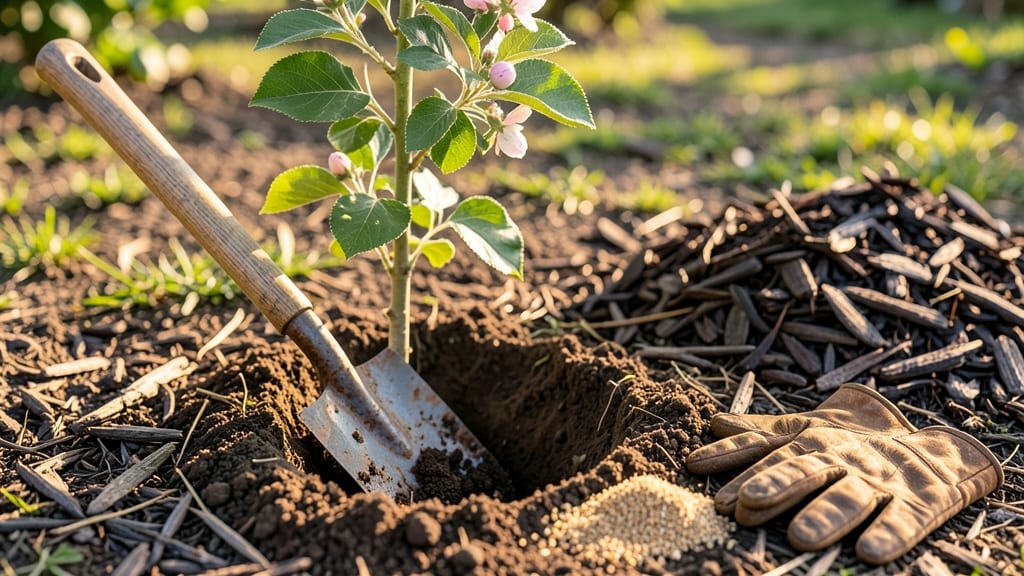
If you're dreaming of a backyard bursting with crisp, homegrown 🍎 apples, when to plant apple trees in South Carolina could make or break your harvest.
The state's unique climate—with its mild winters and hot summers—means planting at the wrong time can leave your tree struggling or even failing to produce fruit.
Most gardeners assume spring is the only window, but in SC's 7b-8b zones, fall planting often gives your apple tree a head start. The key lies in understanding chill hours, those critical cold periods trees need to bloom properly.
Skip this step, and you might end up with beautiful leaves but no apples.
I'll walk you through the best months to plant based on your region—whether you're in the coastal plains, Piedmont, or Upstate—and which varieties thrive here. You'll also discover pro tips to beat SC's heat and ensure your tree grows strong enough to bear fruit year after year.
Ready to turn your orchard dreams into reality? Let's get those roots in the ground at the perfect time for reliable harvests and fewer headaches down the road.
Best planting months for apple trees in South Carolina by variety
Planting apple trees in South Carolina requires precise timing to account for the state’s warm winters and high heat. Unlike northern climates, SC’s USDA Zones 7b-8b mean traditional apple varieties often fail—unless you choose low-chill varieties and plant at the right time.
The best windows are late winter to early spring (February-March) or fall (October-November).
Spring planting aligns with bud break, giving roots time to establish before summer heat. Fall planting, however, offers a longer root establishment period before winter dormancy. Coastal SC (e.g., Charleston) has milder winters, while the Upstate (e.g., Greenville) faces slightly cooler temperatures—both influence your ideal timeline.
Your choice of apple variety dictates the best planting month. Low-chill varieties (300-500 chill hours) like ‘Anna’ or ‘Dorsett Golden’ thrive in SC’s climate, while standard varieties (e.g., ‘Fuji’) need 800+ chill hours and rarely succeed. Always check a tree’s chill hour requirement before purchasing.
Best Planting Windows for Apple Trees in SC
| Variety Type | Chill Hours Needed | Best Planting Month | Regional Notes |
|---|---|---|---|
| Low-Chill (300-500) | ‘Anna’, ‘Dorsett Golden’, ‘Ein Shemer’ | February-March or October-November | Thrive in Coastal SC; avoid summer planting. |
| Semi-Dwarf (400-600) | ‘Gala’, ‘Jonagold’, ‘Honeycrisp’ | Late February-March (spring) or October | Best for Piedmont/Upstate; needs well-draining soil. |
| Standard (600-900) | ‘Fuji’, ‘Granny Smith’, ‘Golden Delicious’ | Not recommended for SC (risk of poor fruit set) | Avoid unless in microclimates with extra chill (e.g., mountain areas). |
*Chill hours = number of hours below 45°F needed for fruit production.
For bare-root trees, spring planting (February-March) is ideal—roots wake up with the tree, reducing transplant shock. If you opt for container-grown trees, fall planting (October-November) works well, as established roots handle winter better. Never plant in summer—SC’s heat stresses young trees, leading to poor survival rates.
Regional microclimates play a key role. Coastal SC (e.g., Hilton Head) has fewer chill hours (400-500), so stick to varieties like ‘Anna’ or ‘Dorsett Golden’. The Upstate (e.g., Greenville) sees 500-600 chill hours, allowing semi-dwarf options like ‘Gala’.
Always verify your last frost date—typically mid-March in most of SC.
Spacing is critical for apple trees in SC’s heat. Dwarf varieties need 8-10 feet between trees, while standard trees require 20+ feet. Poor spacing leads to fungal diseases (e.g., apple scab) due to high humidity and limited airflow.
Plant in full sun (6+ hours daily) and avoid low-lying areas where frost lingers.
After planting, mulch heavily (3-4 inches of organic mulch) to retain moisture and regulate soil temperature. Water deeply (15-20 gallons per tree) every 7-10 days during the first year, focusing on the root zone. Avoid overhead watering to prevent disease spread—use drip irrigation instead.
If you miss the ideal planting window, don’t despair. Container-grown trees can be planted in early December, though they’ll need extra winter protection (e.g., burlap wraps). Just avoid summer planting—SC’s heat stress kills young apple trees before they establish.
Pro tip: Test your soil’s pH (6.0-7.0) and drainage before planting. Amend clay soil with compost or sand to prevent root rot—a common issue in SC’s heavy soils. A well-prepared site sets the stage for healthy fruit production in years to come.
How chill hours affect apple tree success in SC’s climate
South Carolina’s mild winters mean traditional apple varieties often fail to produce fruit because they need 400-900 chill hours—a period below 45°F—to set buds. Without enough cold exposure, trees either bloom poorly or produce tiny, bitter apples.
This is why low-chill varieties (300-500 hours) thrive here, while standard varieties like Fuji or Gala struggle.
Chill hours vary across SC: the Upstate (Zone 7b) gets 600-800 hours, while the coastal Lowcountry (Zone 8a) sees only 300-500 hours. For example, Anna apples need just 300 chill hours, making them perfect for Charleston, while Ein Shemer (500 hours) works in Greenville.
Always check a tree’s chill requirement before buying!
If you’re unsure about your local chill hours, look for partial-leafing varieties like Dorsett Golden, which tolerate 200-400 hours and produce fruit even in warm winters. These varieties also handle SC’s humidity and heat spikes better than traditional apples.
Just be prepared for smaller fruit sizes—trade-offs are part of growing apples in our climate!
Another trick? Plant two compatible varieties for cross-pollination. For example, Anna (300 hours) pairs well with Ein Shemer (500 hours), ensuring better fruit set. Without cross-pollination, you might end up with no apples at all, even if the tree looks healthy.
Pro tip: Space trees 25-40 feet apart for optimal pollination.
SC’s spring heat waves (like those in April-May) can also stress apple trees by breaking dormancy too early, leading to frost damage. To mitigate this, choose late-blooming varieties like Tropsburg (400 hours) or Haralson (500 hours), which bloom after the last frost risk has passed.
Always monitor your local frost forecast in late winter!
Finally, avoid summer planting—SC’s heat and humidity make it nearly impossible for bare-root trees to establish roots before the next winter. Instead, focus on fall (October-November) or late winter (February-March) planting. With the right chill hours and timing, your apple tree can thrive and produce fruit year after year!