
Trees
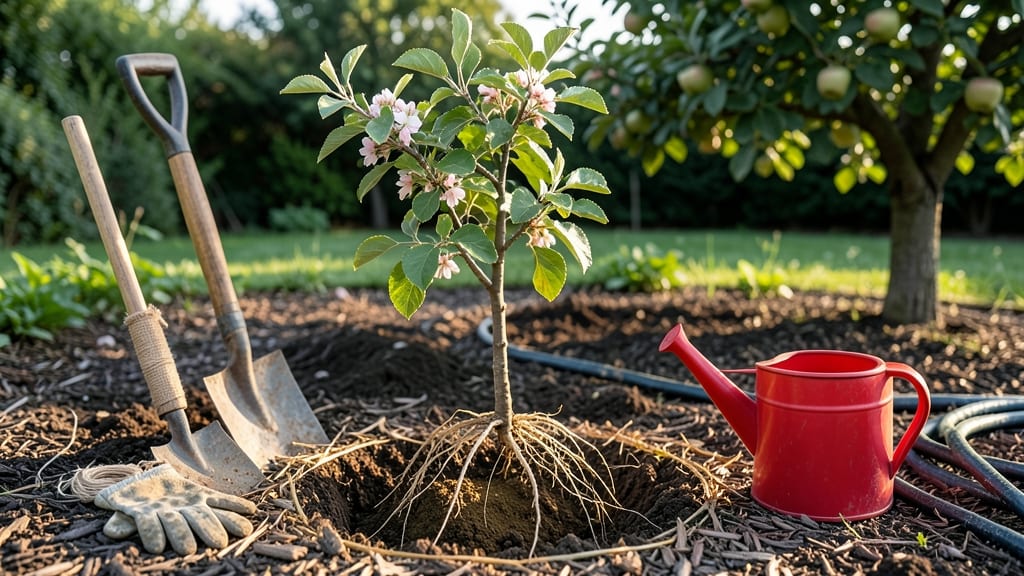
Timing is everything when planting your 🍎 apple tree in Arkansas—get it wrong, and you might be waiting years for that first harvest. Arkansas’s unique climate zones and chill-hour needs mean the difference between a thriving orchard and a sad, frost-bitten sapling.
Most gardeners in zones 7a-8b swear by late winter to early spring (February–March) as the sweet spot, but there’s more to it than just calendar dates.
You’ll need to match your apple variety to Arkansas’s chill-hour requirements—too few, and your tree won’t bloom; too many, and it might struggle in milder winters.
I’ll break down the exact planting windows, from bare-root trees to container-grown saplings, and how to prep your soil for Arkansas’s clay-heavy earth. Plus, I’ll share pro tips to avoid common mistakes that derail even the most eager gardeners.
Ready to plant with confidence? Let’s make sure your 🍎 gets off to the right start—and sets you up for a fruitful future.
Best planting months in Arkansas based on chill-hours and frost dates
Timing is everything when planting apple trees in Arkansas. The state’s USDA zones 7a-8b and chill-hour requirements (300–900 hours) demand precision. Plant too early, and frost will damage tender roots; too late, and your tree won’t establish before summer heat sets in.
My goal? Help you align planting with Arkansas’ average last frost dates—typically mid-March in the Northwest and early March in the Southeast.
Most Arkansas gardeners succeed by planting bare-root apple trees in late winter (February) or container-grown trees in early spring (March-April). This window ensures roots establish before buds swell, reducing stress.
For example, Northwest Arkansas (zone 7a) has colder winters, so February planting is ideal, while Southeast Arkansas (zone 8a) can wait until March to avoid early frost risks.
Here’s the key: Chill-hours—the number of hours below 45°F your tree needs to bloom—dictate variety selection. Arkansas’ 300–600 chill-hour zone (common in the southern half) thrives with low-chill varieties like ‘Anna’ or ‘Dorsett Golden’, while 600–900 chill-hour zones (northern Arkansas) support classic varieties like ‘Fuji’ or ‘Gala’.
Skipping this step guarantees poor flowering or no fruit.
🌱
| Region | Last Frost Date | Ideal Planting Window | Chill-Hour Zone | Best Varieties |
|---|---|---|---|---|
| Northwest Arkansas | Mid-March | Late February–Early March | 600–900 hours | Fuji, Gala, Honeycrisp |
| Central Arkansas | Early March | Early March–April | 400–600 hours | Anna, Dorsett Golden, Enterprise |
| Southeast Arkansas | Late February | March–Early April | 300–400 hours | Akane, Ein Shemer, Redfree |
Microclimates complicate things. A hilltop in the Ozarks may frost later than a valley in the Delta, so check local records or ask your Arkansas Cooperative Extension office. For example, Fayetteville (zone 7b) averages 700 chill-hours, while Little Rock (zone 7a) sees 600 hours.
Use this data to pick varieties that match your yard’s chill accumulation.
Spring planting (April) is riskier but works for container-grown trees or if you missed the winter window. Just ensure soil temps stay above 40°F for 10+ days to avoid root rot.
I once planted a ‘Gala’ in April—it survived but took 2 years to bear fruit compared to my February-planted trees.
Pro tip: Bare-root trees thrive when planted before buds swell (late winter), while container-grown trees can handle spring planting. Both need 1–2 inches of mulch to regulate soil temps. Skip this, and your tree’s roots may overheat in summer or freeze in winter.
🌿
Arkansas’ unpredictable weather adds another layer. A late frost in April can kill new growth, so monitor forecasts via the National Weather Service or apps like PlantNet.
If frost is forecasted after planting, cover young trees with frost cloth or a lightweight blanket. I’ve saved multiple trees this way—it’s worth the effort!
Finally, soil prep matters just as much as timing. Arkansas’ clay-heavy soils drain poorly, so amend with compost or sand to improve aeration. Aim for a pH of 6.0–6.5—test your soil with a home kit or send a sample to the University of Arkansas Soil Lab.
Acidic soil (below 6.0) locks out nutrients, stunting growth.
✂️
How to match apple tree varieties to Arkansas’ chill-hour zones
Arkansas’ chill-hour zones (300–900 hours) are the secret to successful apple tree planting. If you pick a variety that needs 800 chill-hours but your yard only gets 500, your tree will bloom poorly—or not at all.
The state’s four distinct chill zones demand careful variety selection, especially for gardeners in Southeast Arkansas (300–400 hours) vs. Northwest Arkansas (600–900 hours).
Start by checking your local chill-hour accumulation. Use tools like the Arkansas Climate Office’s chill-hour calculator or ask your local Cooperative Extension agent. For example, Jonesboro (zone 8a) averages 450 chill-hours, while Bentonville (zone 7b) sees 750 hours.
This data determines whether you can grow ‘Honeycrisp’ (800 hours) or must stick with ‘Redfree’ (300 hours).
Here’s how to match varieties to Arkansas’ chill zones:
| Chill-Hour Zone | Arkansas Regions | Top Varieties | Disease Resistance | Best For |
|---|---|---|---|---|
| 300–400 hours | Southeast (Hot Springs, El Dorado) | Akane, Ein Shemer, Redfree | Fire blight, scab | Home orchards, urban yards |
| 400–600 hours | Central (Little Rock, Pine Bluff) | Anna, Dorsett Golden, Enterprise | Scab, powdery mildew | Small farms, backyard orchards |
| 600–800 hours | Northwest (Fayetteville, Rogers) | Fuji, Gala, Honeycrisp | Fire blight, cedar rust | Commercial orchards, large yards |
| 800–900 hours | Mountain regions (Bentonville, Eureka Springs) | Granny Smith, McIntosh | Scab, apple maggot | Cool microclimates, high elevations |
Disease resistance is non-negotiable in Arkansas’s humid climate. Varieties like ‘Enterprise’ (fire blight-resistant) or ‘Akane’ (scab-resistant) thrive where traditional apples fail.
I planted a ‘Gala’ in my Little Rock yard (500 chill-hours)—it struggled with poor flowering until I switched to ‘Dorsett Golden’, which bloomed reliably and produced fruit within 3 years.
Pro tip: Dwarf or semi-dwarf rootstocks (like M.9 or B.9) work well for Arkansas gardens, fitting neatly into small yards while matching chill-hour needs. Just ensure your chosen variety is self-pollinating or plant a second compatible tree within 50 feet for cross-pollination.
For example, ‘Anna’ pairs perfectly with ‘Dorsett Golden’.
🌳
If you’re unsure about chill-hours, start with low-chill varieties like ‘Redfree’ (300 hours) or ‘Enterprise’ (500 hours). These are fire blight-resistant and perfect for Arkansas’s warmer zones. For cooler areas, ‘Honeycrisp’ (700 hours) or ‘Fuji’ (800 hours) deliver sweeter fruit but need more winter chill.
Always verify chill-hour data with 3–5 years of local records—Arkansas’s weather can vary wildly year to year.
Finally, consider pollination groups. Arkansas apples fall into Group 1–4 based on bloom times. Planting Group 1 (‘Anna’) with Group 3 (‘Fuji’) ensures cross-pollination for better fruit set.
I once had a ‘Gala’ tree that produced 90% fewer apples until I added a ‘McIntosh’ nearby—now my harvest is consistent and bountiful.