
Plants
If you're staring at a bare patch of dirt in Massachusetts and wondering whether to plant grass seed this late in the season, you're not alone.
The perfect window for planting 🌱 grass (turfgrass) closes fast, but knowing the exact cutoff time could mean the difference between a lush lawn and wasted effort.
Fall is the ideal time to plant grass seed in 5b-6b zones, but even then, pushing too late risks frost damage or poor root establishment. While late August to early October is prime, some varieties can still thrive if planted strategically—just not indefinitely.
Let’s break down the last-minute deadlines and what you can do to salvage your lawn project.
You might think September is always safe, but soil temperatures and frost dates in Massachusetts can shift the timeline unexpectedly. Cool-season grasses like Kentucky bluegrass or fescue need 4-6 weeks before the first frost to establish properly, while warm-season types like Bermuda grass have a much narrower window.
Don’t panic if you’ve missed the ideal window—there are still ways to extend your chances. From choosing fast-germinating seeds to using protective mulch, I’ll show you how to push the limits without sacrificing your lawn’s future. Let’s get started.
Massachusetts last-minute grass seed planting deadlines by hardiness Zone
Deciding whether to plant grass seed in Massachusetts depends heavily on your USDA hardiness zone (5b-6b) and the type of grass you’re growing. Cool-season grasses like Kentucky bluegrass and fescue dominate here, while warm-season varieties like Bermuda or Zoysia are rare but possible in southern zones.
The last safe planting window shifts based on frost dates and soil temperatures.
For most of Massachusetts, the ideal fall planting window runs from late August to early October.
This gives grass seeds 4-6 weeks to germinate before the first frost, which typically hits around mid-October in Zone 5b and slightly later in Zone 6b. Spring planting, meanwhile, should start by mid-May to avoid summer heat stress.
Here’s how your hardiness zone affects your deadline:
If you’re in Zone 5b, planting after October 1st risks frost damage before seeds germinate. In Zone 6b, you can push it to mid-October, but only with fast-germinating varieties like annual ryegrass. Always check a 7-day weather forecast—even a light frost can stunt young grass.
Warm-season grasses like Bermuda or Zoysia (common in southern MA) have a later window—up to late May—but they struggle in cooler zones. Stick to cool-season grasses for reliable results in most of Massachusetts.
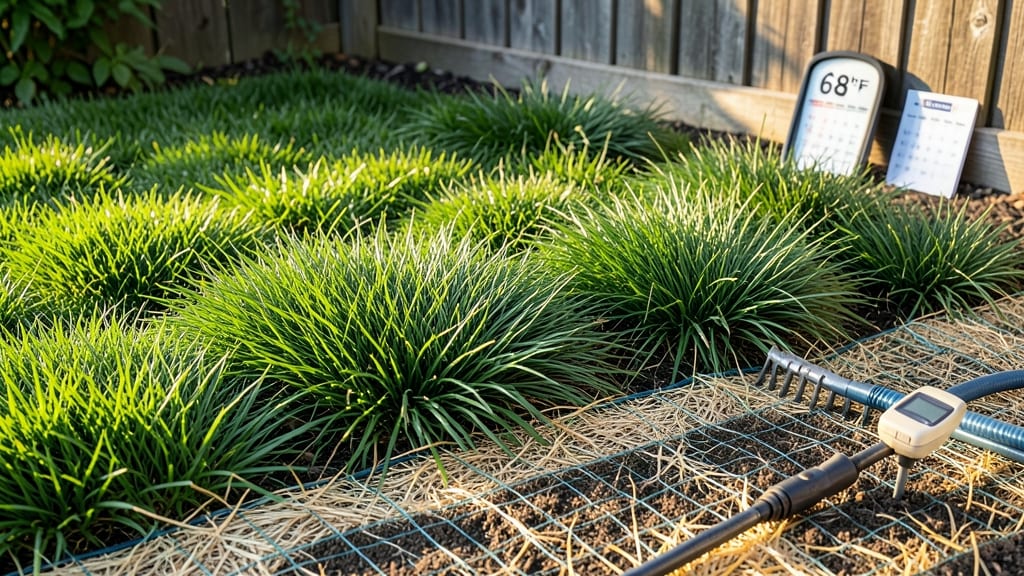
Pro tip: Use a soil thermometer to confirm temperatures. Grass seeds need soil at least 50°F for germination. If it’s cooler, wait or use a straw mulch blanket to insulate seeds.
For late-season planting, prioritize shade-tolerant varieties like fine fescue if your lawn gets afternoon sun. They establish faster in cooler temps and resist drought better than Kentucky bluegrass.
🌱
How late can you plant grass seed in Massachusetts without risking winter kill?
If you’ve missed the ideal late August to early October window for planting grass seed in Massachusetts, don’t toss that seed packet just yet. With the right strategies, you can still establish a lawn—but you’ll need to act fast and prepare for cold weather challenges.
The key is understanding your soil temperature, choosing the right grass type, and protecting young seedlings from frost.
For most of Massachusetts (zones 5b-6b), the absolute cutoff for planting cool-season grasses like Kentucky bluegrass or tall fescue is around 4-6 weeks before the first frost. In 2024, that typically lands in early to mid-October, but late September plantings can still work if you’re proactive.
Warm-season grasses like Bermuda or Zoysia have an even tighter window—usually closed by early September.
Your first step is checking your soil temperature. Grass seeds need soil that’s at least 50°F (10°C) to germinate properly. Use a soil thermometer to test—if it’s below this threshold, your seeds may sit dormant or rot.
If temperatures are dropping fast, consider using a seedling blanket or straw mulch to insulate the soil and keep it warm longer.
⚠️ WARNING: Late Planting Risks
Planting grass seed too late in Massachusetts can lead to:
- Frost damage before roots establish
- Weed competition outpacing your grass
- Poor germination due to cold soil
- Winter kill if seedlings aren’t hardy enough
Solution: Choose fast-germinating varieties like annual ryegrass and protect seedlings with mulch or frost cloth.
To extend your planting window, focus on fast-germinating varieties. Annual ryegrass, for example, can sprout in as few as 5-7 days and handles cooler temperatures better than other grasses.
Pair this with a light layer of straw mulch (not hay—it contains weed seeds) to insulate the soil and retain moisture. If a hard frost is forecast within 2 weeks, cover your new seedlings with frost cloth or even old blankets at night.
Watering becomes even more critical when planting late. New seedlings need consistent moisture to develop deep roots before winter sets in. Water deeply every 2-3 days in the first 2 weeks, aiming for 0.5-1 inch of water per week.
Use a soaker hose or drip irrigation to avoid disturbing the soil. If possible, water in the early morning to reduce evaporation and fungal risks.
If you’re pushing the envelope—say, planting in early October—consider overseeding instead of a full replant. Overseeding means spreading seed over your existing lawn to fill in thin spots. This method requires less soil preparation and gives young seedlings a head start by leveraging your established grass’s root system for support.
Just be sure to mow your lawn shorter than usual before overseeding to maximize seed-to-soil contact.