
Plants
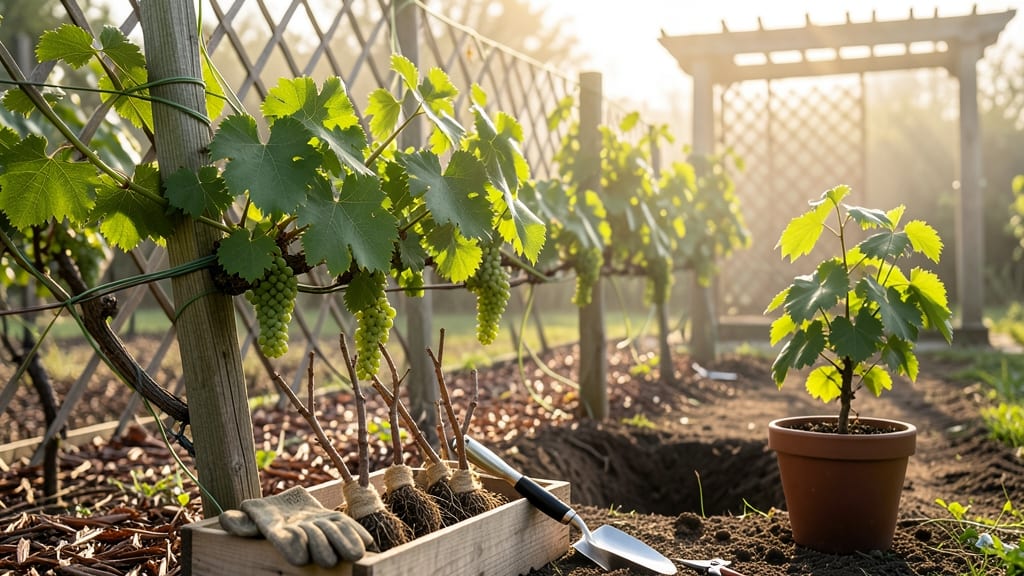
Timing your grape planting in Alabama isn’t just about seasons—it’s about matching varieties to your region’s exact chill hours for thriving vines and bountiful harvests. With USDA zones 7b-8a offering 400-1000 chill hours, you’ll need to know precisely when to plant 🍇 for success.
Most Alabama gardeners plant grapes in late winter or early spring, but the exact timing depends on whether you’re growing Muscadines or wine grapes.
Dormant bare-root vines should go in the ground 2-3 weeks before your last frost date—typically by mid-March—to give roots time to establish before summer heat arrives.
Why does this matter? Planting too early risks frost damage, while waiting too long can stunt growth. I’ll break down the best varieties for Alabama’s climate and how to align planting with your local chill-hour zone for maximum yield.
Let’s dive into the chill-hour matching guide so you can pick the perfect planting window for your grapes—and set yourself up for a harvest-ready vineyard by late summer.
Alabama grape planting timeline by chill-hour zones
Alabama’s diverse climate—spanning USDA zones 7b to 8a—means grape planting success hinges on matching varieties to your chill-hour zone. These zones determine how many hours below 45°F your area experiences annually, a critical factor for grape dormancy.
In Alabama, chill hours typically range from 400 to 1,000+ hours, dictating which varieties thrive in your county.
For example, Muscadine grapes (native to Alabama) need 200–400 chill hours, while Vitis vinifera (European wine grapes) require 700–1,000+ chill hours. Planting at the wrong time—like too early in Zone 8a or too late in Zone 7b—can stunt growth or invite disease.
Let’s break down the ideal planting windows for each zone to maximize your harvest potential.
⚠️ Key Insight: Alabama’s last frost typically occurs around March 15, but microclimates in northern counties (like Madison or Marshall) may see frost into early April. Always plant 2–3 weeks before your local last frost date to avoid frost damage to emerging vines.
| Chill-Hour Zone | Alabama Counties | Best Planting Window | Dormant Bare-Root Planting | Varieties to Choose |
|---|---|---|---|---|
| 400–700 Hours | Mobile, Baldwin, Escambia, Coffee | Late February to early March | February 15–March 10 | Scuppernong, Carlos, Ison |
| 700–1,000 Hours | Jefferson, Shelby, St. Clair, Tuscaloosa | Mid-March to early April | March 1–April 5 | Black Spanish, Catawba, Norton |
| 1,000+ Hours | Madison, Marshall, DeKalb, Etowah | Early to mid-April | April 1–April 15 | Chardonnay, Cabernet Sauvignon, Merlot |
If you’re planting bare-root vines (the most common method in Alabama), aim for dormant planting in late winter. These vines are easier to handle and establish roots before the growing season kicks in.
For container-grown grapes, you can extend your window slightly into May, but they’ll need consistent watering to compensate for slower root establishment.
Southern Alabama’s warmer microclimates (like Mobile or Baldwin County) allow for earlier planting, but avoid rushing—soil temperatures below 50°F can delay root growth. Use a soil thermometer to confirm the ground has warmed to at least 55°F before planting.
In cooler northern zones, wait until the soil is consistently above 60°F to prevent shock.
Pro tip: Mulch heavily after planting with straw or wood chips to retain moisture and regulate soil temperature. This is especially critical in Alabama’s humid summers, where rapid temperature swings can stress young vines. Mulch also suppresses weeds, reducing competition for nutrients.
For Vitis vinifera varieties (like Chardonnay or Cabernet Sauvignon), which need higher chill hours, consider delayed planting until early April in northern Alabama. These grapes are frost-sensitive, so planting too early risks damage from late frosts.
Conversely, Muscadine grapes can tolerate earlier planting and even handle slight frost exposure better than other varieties.
🌱 Regional Note: If you’re in Zone 8a (e.g., Huntsville or Decatur), monitor local weather forecasts for late-season frosts in April. These can devastate young vines, so have frost cloth ready if planting in early March.
Finally, remember that grafted vines (common in Alabama nurseries) have different dormancy needs than seed-grown grapes. Always check the label for chill-hour requirements and match them to your zone.
For example, a Norton grape (a favorite in Alabama) needs 800–1,000 chill hours, making it ideal for central and northern counties.
By aligning your planting timeline with your chill-hour zone, you’ll set your grapevines up for strong root development, vigorous growth, and—most importantly—a bountiful harvest come late summer or early fall. 🍇
Best grape varieties for Alabama's climate and when to plant them
Alabama’s USDA zones 7b-8a create a perfect climate for grapes, but not all varieties thrive equally. The key is matching chill-hour requirements to your county’s winter temperatures.
For example, Muscadine grapes (native to the Southeast) need only 400-700 chill hours, while Vitis vinifera (wine grapes) demand 1000+ chill hours—which most of Alabama doesn’t provide.
I’ve narrowed down the top 3 varieties for Alabama gardeners: Black Spanish (Muscadine), Catawba (hybrid), and Norton (a native favorite). Each has a specific planting window tied to its chill needs.
For instance, Black Spanish can handle Alabama’s mild winters, while Norton requires slightly more chill hours but rewards you with exceptional disease resistance.
Here’s how to align planting with your variety’s needs—and avoid common mistakes like waiting too long for root establishment before summer heat arrives.
For nursery-grown vines, the best time to transplant is late winter or early spring, once the soil is workable but before buds break. If you’re planting bare-root stock, soak the roots for 4-6 hours before setting them in well-draining soil with a slightly acidic pH (6.0-6.5).
In northern Alabama (USDA 7b), aim for March 1-15, while southern counties (USDA 8a) can wait until March 15-April 1.
Pro tip: If you’re in a warmer microclimate (like near Mobile Bay), opt for early-maturing varieties like Scuppernong to avoid summer heat stress. Always choose disease-resistant rootstock to combat Alabama’s humid summers.
Once planted, grapes need 6-8 hours of sunlight daily and consistent moisture—especially during fruit set. Mulch heavily to retain soil moisture and protect roots from temperature swings.