
Plants
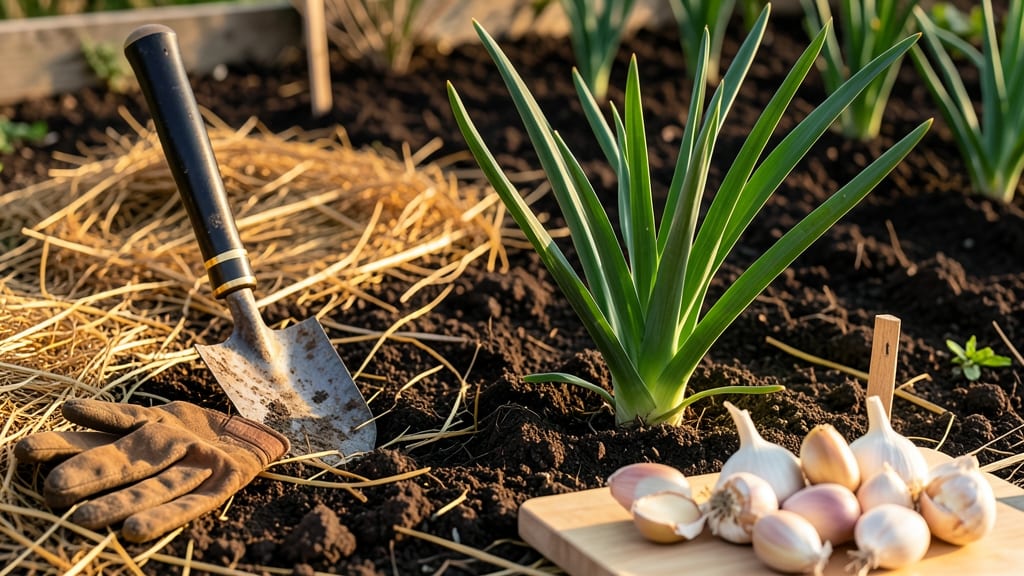
If you’ve ever wondered when to plant garlic in New Hampshire, timing isn’t just important—it’s the difference between a bumper crop of flavorful bulbs and a disappointing harvest.
The key? Planting 🧄 garlic in the fall, between mid-October and November, when soil temps drop but before the ground freezes solid.
New Hampshire’s Zone 5a-6b climate means garlic thrives with cold exposure, especially hardneck varieties that produce prized scapes. But softneck types, while less cold-hardy, still do well if planted early enough.
The goal? Get those cloves in the ground 4-6 weeks before the first hard frost—typically by late October—to give roots time to establish before winter.
Why does this matter? Fall-planted garlic spends winter dormant, then bursts into growth in spring, yielding bulbs by late June or July. Skip this window, and you risk weak plants or missed harvests.
I’ll break down exactly how to time it right, whether you’re growing hardneck for scapes or softneck for storage, plus tips to adjust for NH’s microclimates.
Ready to grow the best garlic your neighbors will envy? Let’s dive into the perfect planting schedule—and why a little cold never hurt a garlic bulb.
Best planting months for garlic in New Hampshire: hardneck vs softneck breakdown
New Hampshire’s Zone 5a-6b climate demands precise timing for garlic—plant too early, and bulbs rot; too late, and they won’t mature. The only successful window is fall planting, typically between mid-October and early November, when soil temps drop below 50°F (10°C) but before the ground freezes.
Hardneck varieties—like ‘German White’ or ‘Music’—thrive in NH’s cold winters, producing scape shoots in summer. Softneck types, such as ‘Silverskin’, are less common but store better. Both need 6-8 weeks of cold dormancy before spring growth begins.
Here’s the key: Plant garlic 4-6 weeks before your average first hard frost (typically mid-October in most of NH). For coastal areas like Portsmouth, aim for late October; inland regions (e.g., Manchester) can plant slightly earlier.
For hardneck garlic, prioritize varieties like ‘Chesnok Red’ or ‘Korean Red’, which handle NH’s winters better than softnecks. Plant cloves 2 inches deep, 4 inches apart, with the pointed end up—this ensures straight, healthy growth.
If you miss the fall window, spring planting is risky in NH. While some gardeners try it in March or April, bulbs often bolt (flower prematurely) due to warm spells. Spring-planted garlic rarely stores well and yields poorly compared to fall-planted crops.
Pro tip: Use a soil thermometer to confirm temps are below 50°F (10°C) before planting. Cold soil signals it’s time—don’t wait for the first frost! Overwintered garlic emerges stronger and resists pests like garlic rust.
Remember: No garlic, no scapes. Hardnecks need cold to form those prized summer shoots. If you’re growing ‘Music’ or ‘German White’, mark your calendar for late June harvests—that’s when scapes peak!
For softneck varieties, focus on storage quality. While less common in NH, ‘Artichoke’ or ‘Silverleaf’ can work in milder microclimates (e.g., near the coast). Plant them 2-3 weeks later than hardnecks to avoid winter heaving.
Best planting months for garlic in New Hampshire: hardneck vs softneck breakdown
New Hampshire’s Zone 5a-6b climate demands precise timing for garlic planting. The only successful window is fall—typically between mid-October and November. This gives garlic roots time to establish before winter dormancy, ensuring robust growth in spring.
Hardneck varieties, like ‘German White’, thrive with cold exposure, while softneck types need early planting to survive milder winters.
For hardneck garlic, aim to plant by October 15th in most of NH. Coastal areas (like Portsmouth) can extend to early November, but inland regions (e.g., Manchester) should plant by mid-October.
Softneck varieties, like ‘Silverskin’, are less cold-hardy and must be planted by October 1st to avoid winter damage.
Here’s why timing matters: Garlic needs 4-6 weeks of root growth before the ground freezes. In NH, soil temps drop below 40°F (4°C) by late October, signaling it’s time to plant. Miss this window, and your bulbs may struggle or fail entirely.
| Variety Type | Ideal Planting Month | Key Notes |
|---|---|---|
| Hardneck (e.g., 'German White') | Mid-October to November | Cold-hardy; produces scapes. Plant by October 15th for best results. |
| Softneck (e.g., 'Silverskin') | Early October to October 15th | Less cold-tolerant; prioritize early planting to avoid winter kill. |
| Both Types | Avoid planting after November | Risk of heaving or poor root establishment before winter. |
Soil temperature is your best guide. Use a soil thermometer to confirm temps are below 50°F (10°C)—the ideal range for planting. In NH, this usually aligns with late October. If you’re unsure, err on the earlier side; garlic planted too late may not survive the winter.
Pro tip: Mark your calendar for October 1st as your last chance to plant softneck varieties. For hardnecks, extend to October 31st, but monitor frost forecasts. A light frost after planting won’t harm established cloves, but a hard freeze will.
Once planted, mulch with 4-6 inches of straw to insulate bulbs through winter. This protects against heaving (when soil freezes and thaws, pushing bulbs out of the ground) and ensures a strong spring harvest.
With the right timing, your garlic will be ready to harvest by late June or July—just in time for summer cooking! 🧄