
Trees
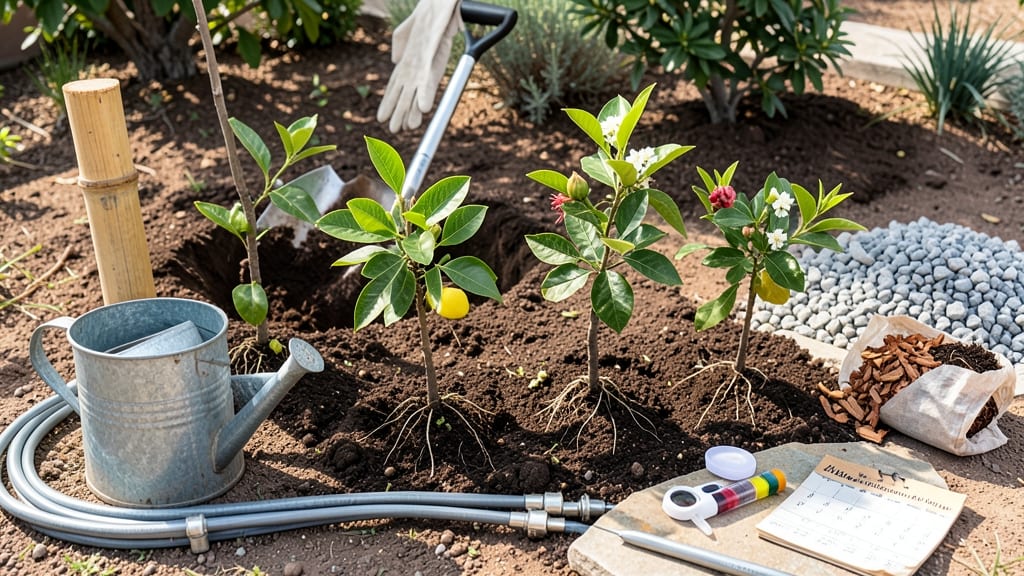
Planting fruit trees in Arizona isn’t just about picking the right variety—it’s about outsmarting the desert’s brutal heat with the perfect timing. Your best shot at success comes during the cool-season planting window, when temperatures cooperate and roots can establish before summer’s scorching sun arrives.
With 🍎🍊🍇 varieties like citrus, figs, and stone fruits thriving in Arizona’s 9b climate, knowing when to plant makes all the difference. Whether you’re working with bare-root saplings or container-grown trees, the November–February window is your golden opportunity to avoid stress and set your trees up for a fruitful future.
But here’s the catch: not all fruit trees play by the same rules. Citrus loves the cooler months, while stone fruits need careful attention to avoid early heat exposure.
I’ll break down the exact months for each type, plus soil prep tricks and watering hacks to keep your young trees thriving in Arizona’s arid conditions.
Ready to turn your backyard into a bountiful orchard? Let’s dive into the cool-season secrets that’ll have your fruit trees flourishing year after year.
Best planting months for Arizona fruit trees by type (citrus vs. stone fruits)
Arizona’s drought-resistant fruit trees thrive when planted during the coolest months, avoiding the brutal summer heat. The ideal planting window spans from November through February, when soil temperatures stay mild and rainfall is more predictable. This timing gives young roots time to establish before the 100°F+ summers arrive.
Citrus trees like lemons, oranges, and grapefruits are especially sensitive to heat stress when newly planted.
Stone fruits such as peaches, plums, and apricots also benefit from cooler temperatures, though they can tolerate slightly warmer conditions than citrus. Figs and pomegranates, however, are more adaptable and can handle early spring plantings in mild microclimates like Tucson.
Here’s how to match your fruit tree type to Arizona’s microclimates—from the low desert’s 110°F summers to the high desert’s cooler nights.
If you’re planting container-grown trees (potted), you can extend the window slightly into March, but avoid April and beyond—the heat will shock delicate roots. For bare-root trees, plant immediately after purchase to prevent root desiccation, even if it’s slightly outside these windows.
Pro tip: Check the USDA Zone 9b guidelines for your specific Arizona location. For example, Yuma’s Zone 10a allows citrus planting until February, while Flagstaff’s Zone 7a can handle late-spring plantings if soil is kept moist.
Always monitor 10-day forecasts for unexpected cold snaps, even in desert areas. A 28°F night can kill young citrus trees overnight. Use frost cloth if planting near March.
For dwarf varieties (like dwarf Meyer lemons or miniature peaches), the rules are slightly relaxed—you can plant up to early April in sheltered microclimates, but mulch heavily to retain moisture.
Remember: The first 3 months after planting are critical. Focus on deep watering (15–30 gallons per tree) and mulching to protect roots from temperature swings. 🌱
How to prepare your Arizona soil and site for fruit tree success
Arizona’s soil can be a double-edged sword for fruit trees—often packed with nutrients but desperately needing drainage and organic matter to thrive. Before planting, I always test my soil’s pH (aim for 6.0–7.0) and amend it with compost or aged manure to improve structure.
Native soils here tend to be alkaline, so a gypsum amendment can help break up clay and encourage root penetration.
Drainage is non-negotiable in Arizona’s arid climate. If your yard has heavy clay, I recommend amending with sand or perlite to create a loamy texture. Raised beds are another great option—they warm up faster in spring and give roots room to spread without waterlogging.
For container-grown trees, ensure pots have drainage holes and use a well-draining mix like cactus soil blended with compost.