
Plants
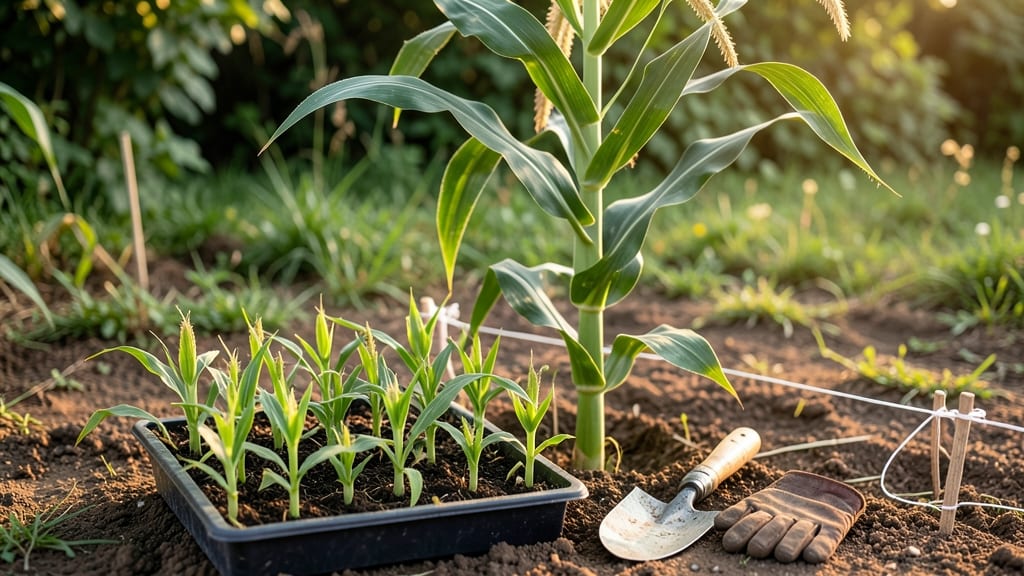
Timing your Corn 🌽 planting in North Carolina isn’t just about following a calendar—it’s about catching that sweet spot between frost risk and scorching summer heat.
Get it right, and you’ll enjoy ears of corn so sweet they’ll make your neighbors jealous; get it wrong, and you might end up with stunted stalks or worse.
Here’s the deal: North Carolina’s USDA Zones 7b-8b give you a mid-April to early June window to plant, but the exact timing depends on where you live.
Coastal areas can start earlier, while mountain regions need to wait until after the last frost—usually mid-April in the Piedmont but later in the higher elevations.
But here’s what most gardeners miss: soil temperature matters just as much as the calendar. Corn needs soil that’s at least 60°F to germinate properly, and waiting for those warm days makes all the difference.
I’ll show you how to check your soil, pick the right varieties for your region, and even salvage a late planting if you’re not ready to give up just yet.
Ready to grow corn that’s taller than your fence and sweeter than store-bought? Let’s break down the exact steps to plant 🌽 like a pro—no guesswork, just golden kernels.
North Carolina corn planting deadlines by USDA Zone 7b/8a (with frost risk factors)
North Carolina’s USDA Zones 7b and 8a offer ideal conditions for growing corn, but timing is everything. Plant too early, and frost will kill tender seedlings. Plant too late, and you’ll miss the 90-120 day window needed for a full harvest before fall frosts.
The key is understanding your last frost date and soil temperature thresholds.
For most of North Carolina—especially the Piedmont region (Raleigh, Greensboro)—the last frost date typically falls between mid-April and early May.
In Coastal NC (Zone 8a, Wilmington, Fayetteville), you can plant as early as late March, while Mountain regions (Asheville, Boone, Zone 6b) may not see their last frost until late May.
Corn seeds need soil temperatures of at least 50°F to germinate, but they thrive best when soil reaches 60°F or warmer. In North Carolina, this usually aligns with early to mid-April in Coastal areas and late April to early May in the Piedmont and Mountains.
Here’s how to align your planting with North Carolina’s climate and frost risks:
| Region | USDA Zone | Last Frost Date | Optimal Planting Window | Soil Temp Requirement |
|---|---|---|---|---|
| Coastal NC (Wilmington, Fayetteville) | 8a | Late March | Mid-March to early April | 50°F+ (earlier varieties) |
| Piedmont (Raleigh, Charlotte) | 7b | Mid-April | Late April to early May | 60°F+ (ideal for germination) |
| Mountains (Asheville, Boone) | 6b | Late May | Early to mid-May | 60°F+ (short growing season) |
If you’re unsure about your local frost date, check the National Weather Service or use a frost calendar for your county. For example, Raleigh’s average last frost is April 15th, while Asheville’s is closer to May 10th.
Planting 2 weeks after the last frost gives seedlings time to establish roots before summer heat arrives.
For early varieties (60-75 days to maturity), like ‘Silver Queen’ or ‘Ambrosia,’ you can push planting to late April or early May in most of NC. Mid-season varieties (90 days), such as ‘Pioneer 39B38,’ should be planted by early to mid-May to ensure harvest before fall frosts in October.
Pro tip: Use biodegradable corn seed starters or black plastic mulch to warm the soil faster in cooler regions like the Mountains. This can shave off 1-2 weeks from your planting timeline and extend your growing season.
Remember, corn is a warm-season crop, so avoid planting until nighttime temperatures stay above 55°F. If you’re in a microclimate (like a low-lying area or near a large body of water), you may experience earlier last frosts—adjust accordingly.
🌽
5 Critical factors that determine your corn planting success in NC
Planting corn in North Carolina isn’t just about timing—it’s about creating the perfect growing conditions. The soil temperature must be at least 60°F for germination, but even then, other factors like moisture levels and seed depth can make or break your harvest.
I’ve learned the hard way that skipping these steps leads to weak stalks or poor yields, so let’s dive into what truly matters.
First, your soil pH should sit between 6.0 and 6.8. Corn thrives in slightly acidic to neutral soil, and testing your soil before planting saves you from guessing.
If your pH is off, amend it with lime (to raise) or sulfur (to lower) at least 2 weeks before planting. I always test mine in early spring—it’s a small step that pays off big.
Next, moisture consistency is non-negotiable. Corn roots need 1-2 inches of water per week, especially during tasseling and silking. Drought stress at these stages can kill pollen production, leaving you with empty ears.
Mulching with straw or grass clippings helps retain moisture and keeps weeds at bay—my go-to trick for NC’s humid summers.
Wait until soil reaches 60°F+—use a soil thermometer to check. Cold soil delays germination and invites rot.
Plant seeds 1-2 inches deep, 12 inches apart in rows. Deeper planting risks poor emergence; shallower risks drying out.
Pair with beans or squash to improve soil nitrogen and deter pests. Avoid planting near tomatoes or cabbage—they compete for nutrients.
Use a balanced 10-10-10 fertilizer at planting, then side-dress with nitrogen-rich compost when plants are 6 inches tall.
Set up row covers early to block corn earworms. Remove dead stalks post-harvest to reduce overwintering pests.
Don’t overlook companion planting, either. I’ve seen my corn yields double by interplanting with beans or squash. The beans fix nitrogen in the soil, while squash acts as a living mulch, suppressing weeds.
Just avoid planting near tomatoes or cabbage, as they compete for the same nutrients and attract similar pests.
Finally, fertilizer timing is an art. Start with a balanced 10-10-10 mix at planting, then side-dress with compost or a nitrogen boost when your plants hit 6 inches tall.
Over-fertilizing leads to lush foliage but fewer ears—trust me, I’ve made that mistake. And always water in the morning to reduce fungal risks from evening moisture.
Master these five factors, and you’ll be well on your way to growing corn that’s taller, sweeter, and more abundant than your neighbors’—no matter where you are in North Carolina. 🌽