
Plants
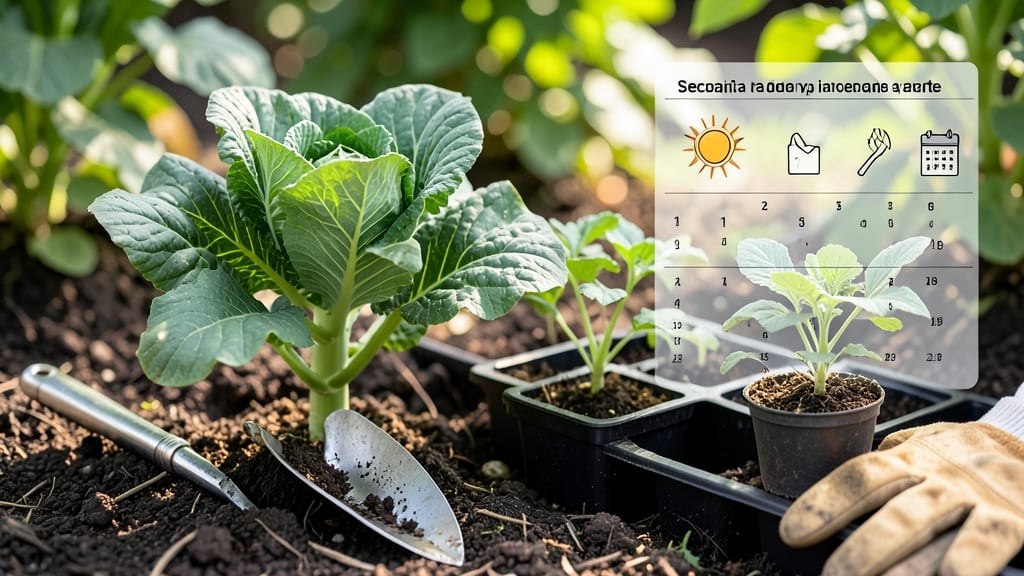
Michigan cabbage planting calendar by frost dates and variety type
Michigan’s USDA Zones 5b-6b create unique challenges for cabbage growers, with last frost dates ranging from mid-April in southern Michigan to late May in the Upper Peninsula.
To maximize your harvest, timing depends on whether you’re planting early, midseason, or late varieties—and whether you’re aiming for a spring or fall crop.
For spring planting, start seeds indoors 6-8 weeks before your last frost date (typically by March 15 in southern Michigan or April 1 in northern regions).
Transplant hardened-off seedlings 2-3 weeks after the last frost, usually mid-to-late May. This ensures heads mature before summer heat stress sets in.
Fall planting offers a second harvest window. Sow seeds directly outdoors 8-10 weeks before your first frost (around late July to early August). Choose cold-hardy varieties like Savoy cabbage to withstand early October chills while still forming crisp heads.
| Planting Window | Variety Type | Best Months | Days to Maturity | Notes |
|---|---|---|---|---|
| Spring | Early (Golden Acre) | March (indoors), May (transplant) | 60-70 days | Fastest for early harvest |
| Spring | Midseason (Red Express) | April (indoors), June (transplant) | 70-80 days | Balanced for summer heat |
| Fall | Late (Savoy) | July-August (direct sow) | 80-100 days | Cold-hardy, great for late harvest |
| Spring/Fall | All (Early Jersey Wakefield) | March or August | 55-65 days | Versatile for both seasons |
Northern Michigan gardeners in Zone 5b should adjust planting dates 2-3 weeks later than southern regions to avoid late spring frosts. For example, transplant seedlings in late May to early June instead of May. Use black plastic mulch to warm soil faster and extend the growing season.
Pro tip: Direct sowing in late spring (after Memorial Day) works for heat-tolerant varieties like Crimson Globe, but monitor soil temperatures—cabbage struggles when soil exceeds 85°F. A soil thermometer helps track ideal planting conditions (50-60°F for germination).
For fall crops, aim to harvest before hard frosts (below 25°FOctober harvests; in the north, early October is the cutoff. Use row covers to protect plants if frost threatens before maturity.
Always check your local Michigan State University Extension frost date calculator for precise timing—it accounts for microclimates and recent weather trends. Adjust by 1-2 weeks if your area had an early frost the prior year.
Remember: Cabbage thrives in cool weather—planting too late in summer means bolting (premature flowering) or bitter-tasting heads. Balance your schedule between frost risk and heat stress for the best results.
Michigan cabbage planting calendar by frost dates and variety type
Michigan’s USDA Zones 5b-6b create unique challenges for cabbage growers, where late spring frosts and early fall freezes demand precise timing. The key is planting when soil temperatures reach 45°F (7°C)—cabbage seeds won’t germinate in cold soil.
For most of Michigan, this means mid-April to mid-June for spring crops and late July to early August for fall harvests.
Your last frost date (typically April 15) and first frost date (around October 15) are your anchors. Early varieties like Golden Acre can handle cooler soils, while late varieties like Red Express need warmer conditions.
Northern Michigan (Zone 5b) should plant 2-3 weeks later than southern regions (Zone 6b) to avoid frost damage.
Timing also depends on your variety type. Early varieties mature in 60-70 days, midseason in 75-85 days, and late varieties take 90+ days. For example, if you plant ‘Early Jersey Wakefield’ on April 20, you’ll harvest by July 10—just in time for summer meals.
| Planting Window | Variety Type | Days to Maturity | Best For |
|---|---|---|---|
| Mid-April to May 1 | Early (e.g., Golden Acre) | 60-70 days | Spring harvest (June-July) |
| May 1 to June 1 | Midseason (e.g., Red Express) | 75-85 days | Summer harvest (July-August) |
| Late July to August 1 | Late (e.g., Savoy) | 90+ days | Fall harvest (October-November) |
🌱 Pro Tip: Use row covers to extend spring planting by 2-3 weeks.
For fall planting, aim to harvest before the first frost. If you plant ‘Red Express’ on July 20, it’ll mature by October 10—just before frost hits.
In northern Michigan, consider transplanting seedlings instead of direct sowing to ensure faster growth and avoid bolting (flowering prematurely) from heat stress.
Don’t forget about soil preparation. Cabbage thrives in well-draining, slightly acidic soil (pH 6.0-7.0). Work in 2-3 inches of compost before planting, and keep soil moist but not soggy. A mulch layer helps retain moisture and regulate soil temperature—critical for Michigan’s unpredictable weather swings.
To maximize your harvest, plan for successive plantings. Start with early varieties in April, then follow with midseason in May, and finish with late varieties in July. This staggered approach ensures you have cabbage ready to harvest every 2-3 weeks from June through October.
Just remember: consistency is key—whether you’re direct sowing or transplanting, stick to your chosen schedule to avoid gaps in production.
🌿