
Plants
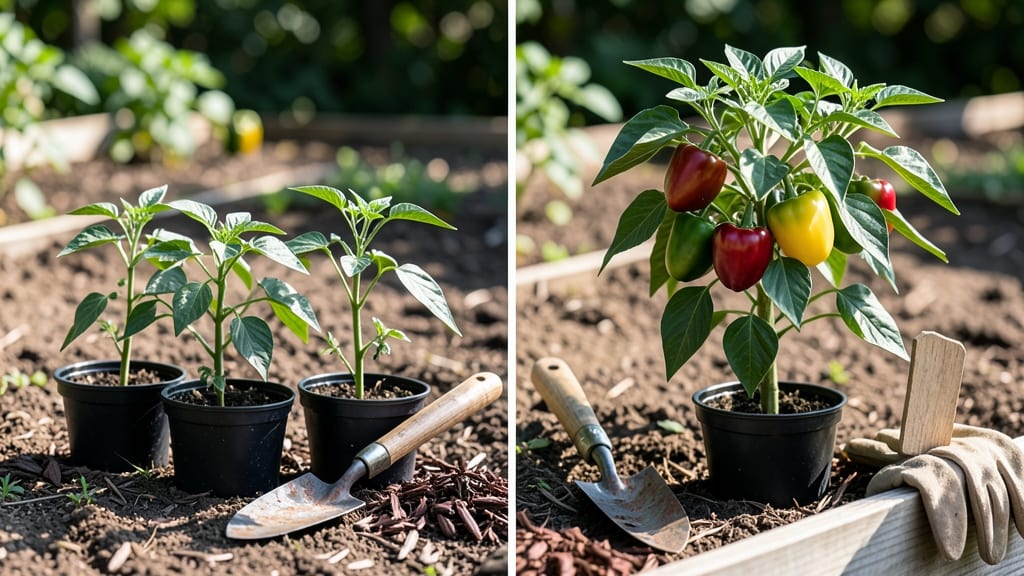
Knowing when to plant bell peppers in Tennessee can mean the difference between a garden bursting with 🌶️ sweet rewards and a sad, wilted disappointment.
Tennessee’s climate—with its warm summers and unpredictable spring frosts—demands precision timing, especially in zones 6a-7b where a single late frost can wipe out your hard work.
Most gardeners in Tennessee plant bell peppers after the last frost date, typically mid-April to early June, but the real secret lies in soil temperature. These heat-loving plants won’t thrive until the ground warms to at least 60°F, which often means waiting until late May in cooler mountain regions.
That’s why I’ve tested both spring and fall planting strategies—because sometimes, the best harvest comes from a late-July start.
If you’re new to growing bell peppers, you might be surprised by how much timing affects flavor and yield. Plant too early, and frost will kill your seedlings. Wait too long, and your peppers will struggle in the summer heat.
I’ll walk you through the exact frost-free windows for your specific Tennessee zone, plus the best heat-tolerant varieties that actually thrive in our long, hot summers.
Ready to grow bell peppers that rival the ones at the farmers’ market? Let’s dive into the perfect planting schedule, soil prep tips, and even a few pro tricks to extend your harvest well into fall. Your taste buds will thank you.
Tennessee frost dates by Zone: best planting windows for bell peppers
Tennessee spans USDA Zones 6a to 7b, meaning frost dates vary dramatically from East Tennessee’s cooler highlands to Middle Tennessee’s warmer valleys. For bell peppers, which hate frost and need warm soil, timing your planting to these zones is critical.
The average last frost date ranges from late March in Zone 7b to mid-April in Zone 6a, but microclimates—like urban heat islands or mountain slopes—can shift this by weeks.
Most Tennessee gardeners aim to plant bell pepper seedlings 2-3 weeks after the last frost, once soil temperatures hit at least 60°F. This gives young plants time to establish roots before summer heat arrives.
For container gardening, you can plant slightly earlier since pots warm faster, but always monitor soil temps with a soil thermometer—peppers will wilt or die if shocked by cold nights.
🌱 Tennessee Bell Pepper Planting Windows by Zone
| USDA Zone | Last Frost Date | Ideal Planting Window | Soil Temp Requirement | Notes |
|---|---|---|---|---|
| 6a (East TN Mountains) | April 15–May 1 | May 1–15 (after frost) | 60°F+ | Use black plastic mulch to warm soil faster. |
| 6b (Middle TN Valleys) | April 1–15 | April 15–May 1 | 60°F+ | Urban areas may be 1–2 weeks earlier. |
| 7a (West TN) | March 20–April 5 | April 1–15 | 60°F+ | Longer growing season; consider fall planting. |
| 7b (Shelby County) | March 15–25 | March 30–April 10 | 60°F+ | Earliest zone; start seeds indoors by Feb 1. |
To pinpoint your exact last frost date, use the National Oceanic and Atmospheric Administration (NOAA) frost calculator or local Cooperative Extension Service resources. For example, Memphis (Zone 7b) typically sees its last frost by March 20, while Bristol (Zone 6a) waits until April 15.
Always add a 2-week buffer after the official date to account for late frosts.
For fall harvests, Tennessee gardeners can plant a second crop in late July (Zone 7b) or early August (Zone 6a). Choose fast-maturing varieties (60–70 days) like ‘Early Cal Wonder’ to beat the first frost in October.
Just be sure to harden off seedlings for 10–14 days before transplanting to avoid shock.
If you’re starting seeds indoors, begin 8–10 weeks before your last frost date. Use grow lights to provide 14–16 hours of light daily, and transplant seedlings outdoors only after they’ve developed 4–6 true leaves.
Harden them gradually by moving them outside for 1–2 hours daily, increasing time over a week.
Pro tip: Black plastic mulch can raise soil temperatures by 5–10°F, letting you plant 1–2 weeks earlier in cooler zones. Lay it down 1–2 weeks before planting to maximize heat absorption. Pair this with row covers for early-season protection against light frosts (down to 28°F).
Remember, soil temperature matters more than air temperature. Use a soil thermometer to confirm readings—peppers won’t thrive until the soil stays above 60°F for 5+ days.
In Zone 6a, this might mean waiting until mid-May, even if air temps are warm earlier. Patience here prevents blossom end rot and stunted growth.
For container gardeners, opt for 5-gallon pots or larger to ensure roots stay warm. Place containers in south-facing spots and use self-watering systems to maintain moisture.
Since pots heat up faster, you can plant 1–2 weeks earlier than in-ground gardens, but monitor for drought stress during Tennessee’s summer heatwaves.
Finally, keep an eye on local weather forecasts in the weeks leading up to planting. A late frost warning might delay your schedule, but it’s better to wait than risk losing young plants.
With the right timing, Tennessee’s 180–220 frost-free days give you plenty of time for a bountiful bell pepper harvest! 🌶️
Top 5 heat-tolerant bell pepper varieties for Tennessee’s hot summers
Tennessee’s summers can hit 90°F+, and standard bell pepper varieties often wilt or produce poorly under this heat. The key to success? Choosing heat-tolerant varieties that thrive in Zone 7a-7b climates while resisting common diseases like blossom end rot and powdery mildew.
These five varieties are my top picks for consistent harvests in Tennessee gardens.
First on the list is ‘Carolina Wonder’, a classic Southern favorite that handles Tennessee’s humidity and heat with ease. It matures in 70-80 days, producing glossy, 4-inch peppers in shades of green, red, and yellow.
This variety also resists cracking, making it ideal for hot, dry summers.
Next, ‘Jupiter’ stands out for its extra-large fruit (up to 6 inches long) and disease resistance. Developed by Ball Seed Company, it thrives in high heat and humidity, with a maturity time of 75-80 days.
Perfect for container gardens or raised beds, it’s a crowd-pleaser for home gardeners and farmers markets alike.
For those who love spicy-sweet hybrids, ‘Aristotle’ delivers bold flavor and heat tolerance. This blocky, 4-inch pepper matures in 70 days and produces consistently through summer’s end. It’s also less prone to sun scald, a common issue in Tennessee’s intense afternoon sun.
Don’t overlook ‘King of the North’, a heirloom variety that performs exceptionally in short-season areas of East Tennessee. While it matures in 75 days, its thick walls and glossy skin make it heat-resistant and slow to spoil.
Ideal for preserving or fresh eating, it’s a versatile choice for gardeners who want long-term storage.
Lastly, ‘Gypsy’ is a compact, high-yielding variety perfect for small spaces or containers. With 60-70 day maturity, it produces 3-inch peppers in green, red, and yellow, and its disease resistance makes it a low-maintenance pick.
This variety is especially great for urban gardeners or those with limited garden beds.
When selecting seeds, always check the packaging for heat tolerance ratings or look for open-pollinated or heirloom varieties, which often adapt better to local climates.
For maximum success, pair these varieties with black plastic mulch to raise soil temperatures and reduce water loss during Tennessee’s scorching afternoons.
Pro tip: Start seeds indoors 8-10 weeks before your last frost date (typically mid-February for most of Tennessee) to give them a head start. Harden off seedlings for 10-14 days before transplanting after May 1 to avoid late frost damage.