
Trees
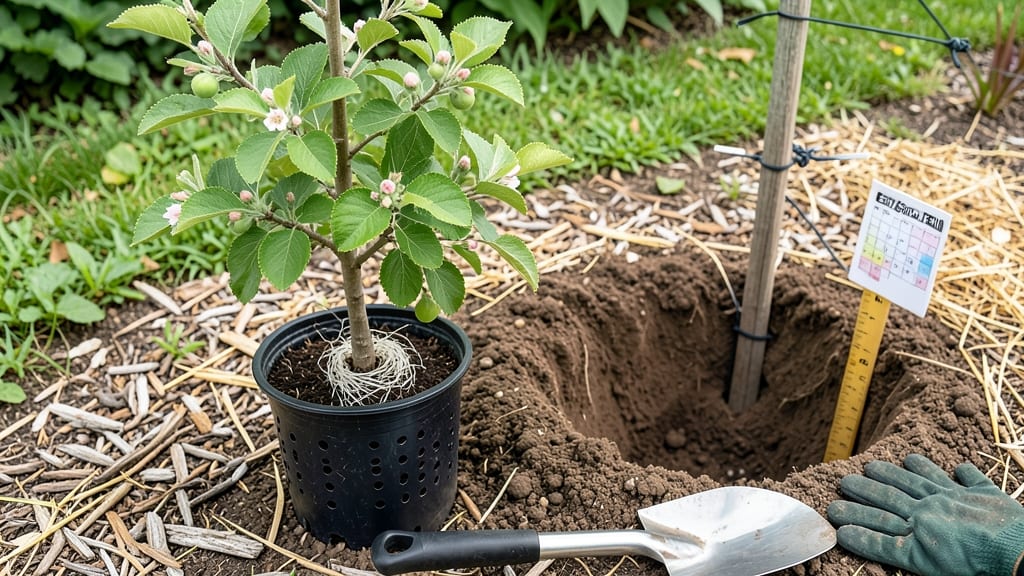
Timing your 🍎 apple tree planting in Connecticut isn’t just about picking a month—it’s about working with the state’s 5b-6b hardiness zones and unpredictable frost dates to give your tree the best shot at thriving.
Plant too early, and you risk exposing delicate roots to late frosts; too late, and your tree might struggle to establish before winter sets in.
Most Connecticut gardeners swear by early spring (March-April) or fall (October-November) as the sweet spots for planting, but why? The key lies in soil temperatures and dormancy cycles—your tree needs time to settle in before the ground freezes or the heat of summer arrives.
Let’s break down the science behind these windows and how to adjust for your specific microclimate, whether you’re in coastal New Haven or inland Hartford.
What you’ll discover is that dormant-season planting isn’t just a recommendation—it’s a game-changer for root growth and long-term health.
I’ll walk you through the exact steps to prepare your soil, choose the right rootstock for CT’s climate, and care for your tree in the months after planting to ensure it’s ready to bear fruit in 3-5 years.
Ready to plant with confidence? We’ll also cover how to spot the signs of a well-timed planting—like strong new shoots in spring—and avoid the 3 biggest mistakes that trip up even experienced gardeners. Let’s get those roots growing the right way.
Optimal planting windows for apple trees in Connecticut’s climate zones
Connecticut’s hardiness zones 5b-6b create a unique challenge for apple tree planting, where timing directly impacts survival and fruit production. The dormant season—fall and early spring—offers the best windows because soil temperatures are cooler, reducing stress on young roots.
I’ve planted apple trees in both seasons and found that fall planting (October-November) gives roots time to establish before winter, while early spring (March-April) avoids frost risk during active growth.
Your local frost dates are critical—planting too early in spring risks frost damage to new shoots, while late fall planting may expose roots to winter heaving. In Connecticut, the average last frost date is mid-April, and the first frost typically arrives in mid-October.
I always check the USDA Plant Hardiness Zone Map for my specific town to fine-tune my schedule, especially in inland areas where frosts hit earlier than coastal regions.
For bare-root trees, which are most commonly sold in fall, aim to plant them 4-6 weeks before the ground freezes. This gives roots enough time to knit together before winter dormancy.
If you’re planting container-grown trees, early spring is ideal because they can handle warmer soil temperatures better than bare-root varieties. I’ve had the most success with ‘Liberty’ and ‘Cortland’ varieties planted in fall, as they establish quickly in Connecticut’s climate.
Soil temperature is another key factor—roots struggle to grow when soil temps drop below 40°F (4°C). In Connecticut, this usually happens by late November, so plant no later than early November for fall planting.
For spring, wait until soil temperatures rise above 45°F (7°C), typically by early April. I always use a soil thermometer to confirm before digging, as cold soil can shock young roots and stunt growth.
Microclimates within Connecticut also play a role. Coastal areas like New London or Groton have milder winters and later frosts, allowing a slightly extended planting window. Inland regions like Hartford or Waterbury freeze earlier, so I adjust my timeline by 1-2 weeks earlier for these areas.
If you’re unsure about your microclimate, observe nearby gardens or ask local nurseries—they’ve planted hundreds of apple trees and know the nuances.
One common mistake I see is planting apple trees in late fall (December) or very early spring (February). Both timings expose roots to extreme conditions—either freezing soil or late frosts that can damage new growth.
Instead, I recommend sticking to the 4-6 week window before the first frost in fall or the 2-3 week window after the last frost in spring. This balance gives your tree the best chance to thrive.
When choosing between fall and spring planting, consider your tree variety and rootstock. Dwarf varieties like ‘Columnar’ or ‘Semi-Dwarf’ establish faster and can handle slightly later planting than standard trees.
I’ve also found that container-grown trees planted in early spring recover better from transplant shock than bare-root trees planted in late fall. If you’re unsure, ask your nursery for recommendations tailored to Connecticut’s climate.
Proper soil preparation is just as important as timing. Before planting, amend your soil with compost and organic matter to improve drainage and fertility. Apple trees prefer slightly acidic soil (pH 6.0-6.5), so I always test my soil in advance.
If your soil is too alkaline, mix in peat moss or sulfur to adjust the pH. Well-prepared soil helps roots establish quickly, whether you’re planting in fall or spring.
After planting, mulch around the base of your tree with 3-4 inches of organic mulch like wood chips or straw. This helps retain moisture, regulate soil temperature, and suppress weeds. I always keep the mulch 6 inches away from the trunk to prevent rot.
Water deeply once a week during the first growing season, especially in Connecticut’s dry summers. Proper mulching and watering give your apple tree the best start, no matter when you plant it.
If you’re planting multiple apple trees, space them 15-25 feet apart for standard varieties or 8-12 feet apart for dwarf trees. This spacing ensures proper airflow and reduces disease risk.
I’ve planted pollinator pairs like ‘Honeycrisp’ and ‘McIntosh’ together to guarantee fruit production. In Connecticut, where pollinators can be scarce, this strategy is especially important for a successful harvest.
🍎 Connecticut Apple Tree Planting Comparison
| Planting Window | Best Months | Soil Temp Threshold | Root Establishment Benefit | Frost Risk | ||||||||||||||||
|---|---|---|---|---|---|---|---|---|---|---|---|---|---|---|---|---|---|---|---|---|
| Fall Planting | October-November | Above 40°F (4°C) | Roots establish before winter | Low (dormant season) | ||||||||||||||||
| Early Spring Planting | March-April | Above 45°F (7°C) | Avoids frost damage to new growth | Moderate (post-last frost) | ||||||||||||||||
| Late Spring Planting | May (risky) | Warmer
Optimal planting windows for apple trees in Connecticut’s climate zonesConnecticut’s 5b-6b hardiness zones create a delicate balance for apple tree planting—too early, and late frosts can damage tender roots; too late, and your tree won’t establish before winter. The ideal planting windows are early spring (March-April) or fall (October-November), when soil temperatures hover between 40°F and 50°F—perfect for root growth without stress. Spring planting gives roots a full growing season to establish before winter, while fall planting allows trees to acclimate to cold before dormancy. Coastal areas like New Haven may have slightly later frost dates than inland Hartford, so adjust your timing accordingly. Let’s break down the science behind these windows and how to choose the best option for your microclimate. 🌱 Comparison Table: Spring vs. Fall Planting for Connecticut Apple Trees Factor |
Spring Planting (March-April) |
Fall Planting (October-November) |
Soil Temperature |
45°F-55°F |
40°F-50°F |
Root Establishment |
6-8 weeks before frost |
4-6 weeks before dormancy |
Frost Risk |
Low (after last frost) |
Moderate (before first frost) |
Best For |
Bare-root trees |
Container-grown trees |
Watering Needs |
High (daily for 2 weeks) |
Moderate (weekly) |
For spring planting, aim to get your tree in the ground 4-6 weeks before the average last frost date (typically mid-April in CT). This gives roots time to spread and strengthen before summer heat arrives. If you’re planting in fall, choose container-grown trees and plant them 6-8 weeks before the first frost (usually late October), allowing roots to establish without winter stress. Pro tip: Use a soil thermometer to monitor temperatures—roots won’t grow well below 40°F. In Zone 5b (northern CT), lean toward early spring planting, while Zone 6b (southern CT) can handle late fall plantings with better success. Always mulch heavily after planting to insulate roots and retain moisture. One common mistake? Planting bare-root trees in summer or container-grown trees in winter. Both scenarios stress trees and lead to poor establishment. Stick to the dormant-season windows, and your apple tree will reward you with stronger growth and earlier fruit production. Ready to pick your perfect planting window? Let’s dive into how frost dates further refine your timing. |