
Plants
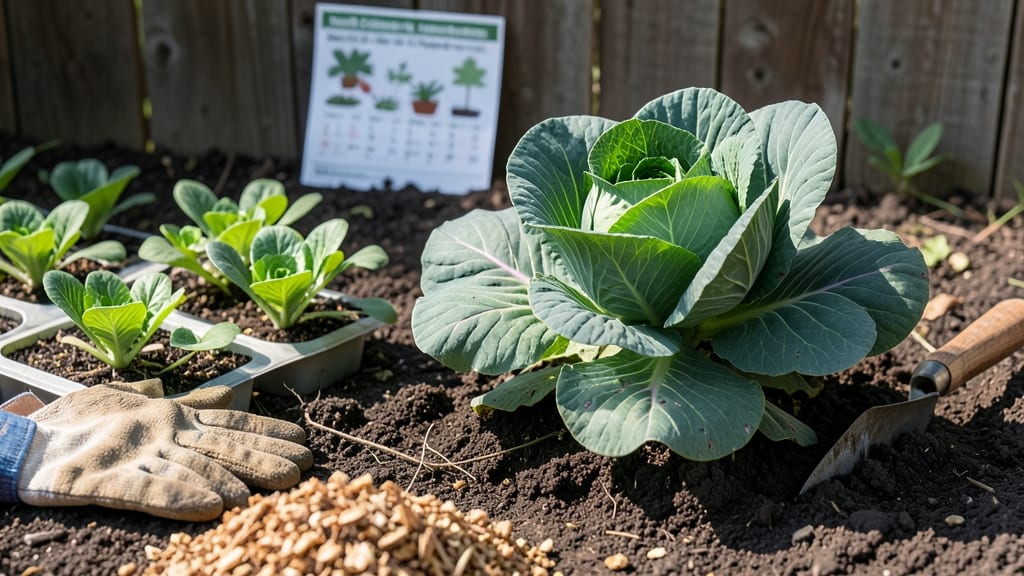
Timing your 🥬 cabbage planting in North Carolina can make or break your harvest—get it wrong, and you’ll end up with frost-bitten leaves or bolted heads before they’re ready.
The key isn’t just knowing when to plant; it’s understanding how NC’s 6b-8a climate zones shift your window by weeks depending on whether you’re in the Coastal Plain, Piedmont, or Mountains.
Most gardeners in North Carolina focus on two perfect planting windows: March-April for spring and August-September for fall. But here’s the catch—your exact dates depend on local frost risks, soil warmth, and even the variety you choose.
Skip the guesswork and plant at the right time, and you’ll enjoy crisp, homegrown heads from June-July and October-November.
I’ll break down the exact months to start seeds indoors or transplant seedlings, plus how to adjust for late frosts in the Mountains or early heat in the Coastal Plain.
Whether you’re a first-time gardener or a seasoned pro, these region-specific tips will help you avoid the most common mistakes that ruin cabbage harvests.
Ready to grow cabbage that thrives? Let’s dive into the frost-free planting calendar that works for your corner of North Carolina—no more wasted seeds or disappointed harvests.
North Carolina cabbage planting calendar by month: frost-free success guide
Cabbage thrives in North Carolina’s 6b-8a USDA zones, but timing your spring and fall plantings is critical to avoid frost damage or summer bolting.
The average last frost ranges from late March (Coastal) to early May (Mountains), while the first frost arrives between mid-October and early November. These dates create a 180-day growing window for two harvests per year.
For spring cabbage, start seeds indoors 4-6 weeks before your last frost or sow directly 2-3 weeks before for faster growth. Fall crops require 100-120 days to mature, so plant seeds 8-10 weeks before first frost. Missing these windows means small heads or bitter flavors from heat stress.
Here’s your month-by-month planting guide, tailored to NC’s three distinct regions. Use this to align your schedule with soil temperatures (ideal: 45-85°F) and rainfall patterns to maximize yields.
| Month | Task | Notes |
|---|---|---|
| February | Start spring seeds indoors | Use grow lights; transplant 4-6 weeks later |
| March | Direct sow spring cabbage (Coastal) | Soil temp: 50-60°F; protect with row covers |
| April | Transplant spring seedlings (all regions) | Space 18-24 inches apart; avoid bolting with shade cloth |
| May | Harvest early spring crops | Heads ready in 60-80 days; watch for cabbage worms |
| June | Plant shade-tolerant varieties (e.g., 'Golden Acre') | Use 30-50% shade cloth to prevent bolting |
| July | Start fall seeds indoors | Transplant 8-10 weeks before first frost |
| August | Direct sow fall cabbage (Coastal) | Soil temp: 60-75°F; mulch to retain moisture |
| September | Transplant fall seedlings (all regions) | Fertilize with 10-10-10 for head formation |
| October | Harvest fall crops before frost | Use row covers to extend season by 2-3 weeks |
🌱 Pro Tip: Succession plant every 2 weeks for continuous harvests!
North Carolina’s Coastal Plain (e.g., Wilmington) enjoys warmer winters, allowing earlier spring plantings (as early as February) and later fall harvests (through December).
In contrast, the Mountains (e.g., Asheville) require delayed spring plantings (after April 15) and earlier fall sowings (by July 15) to avoid frost.
For Piedmont regions (e.g., Raleigh), aim for March 15-April 15 for spring and August 1-September 15 for fall.
Use local frost date maps (like NC State Extension’s) to fine-tune your schedule. Heat-tolerant varieties like 'Crimson' or 'Golden Acre' perform best in summer, while cold-hardy types like 'Danish Ballhead' excel in fall.
After planting, maintain consistent moisture (1-2 inches per week) and fertile soil (pH 6.5-7.0). Mulch with straw or grass clippings to retain soil moisture and suppress weeds. Succession planting every 2-3 weeks ensures a steady supply of fresh cabbage from June through November.
Monitor for pests like cabbage worms and diseases such as clubroot.
How to adjust cabbage planting for North Carolina’s microclimates: Coastal vs. mountain differences
North Carolina’s diverse geography means your cabbage planting dates should shift based on where you live. Coastal areas like Wilmington enjoy warmer winters, while the Mountains (Asheville) face earlier frosts. Even Piedmont regions like Raleigh fall somewhere in between.
Ignoring these differences can lead to frost damage or heat-stressed plants that bolt prematurely. Let’s break down the 4–6 week variations across NC’s three main zones.
Region
Last Frost Date
First Frost Date
Spring Planting Window
Fall Planting Window
Coastal (Wilmington)
Mid-March
Late October
February–March
August–September
Piedmont (Raleigh)
Late March
Mid-October
March–April
August–early September
Mountains (Asheville)
Early May
Early October
April–May
July–August
For Coastal NC, you can start indoor seedlings in January and transplant outdoors by February. Heat-tolerant varieties like ‘Golden Acre’ thrive here, while ‘Early Jersey Wakefield’ bolts less in summer’s warmth. In the Piedmont, wait until soil temps hit 45°F (March) for spring planting.
The Mountains demand patience—wait until after May 1 to avoid late frosts, and opt for cold-hardy varieties like ‘Red Express’.
Succession planting is key for year-round harvests. In Coastal areas, sow seeds every 2–3 weeks from February to May, then again in August. Mountain gardeners should stick to 4-week intervals in July and August for fall crops.
Always check your local USDA Zone (6b–8a) and microclimate—a sheltered valley may frost later than open plains.
Pro Tip: Use row covers in early spring or late fall to extend your planting window by 2–3 weeks in colder zones. This simple trick can mean the difference between a bountiful harvest and a wasted seed packet 🌱.