
Planting
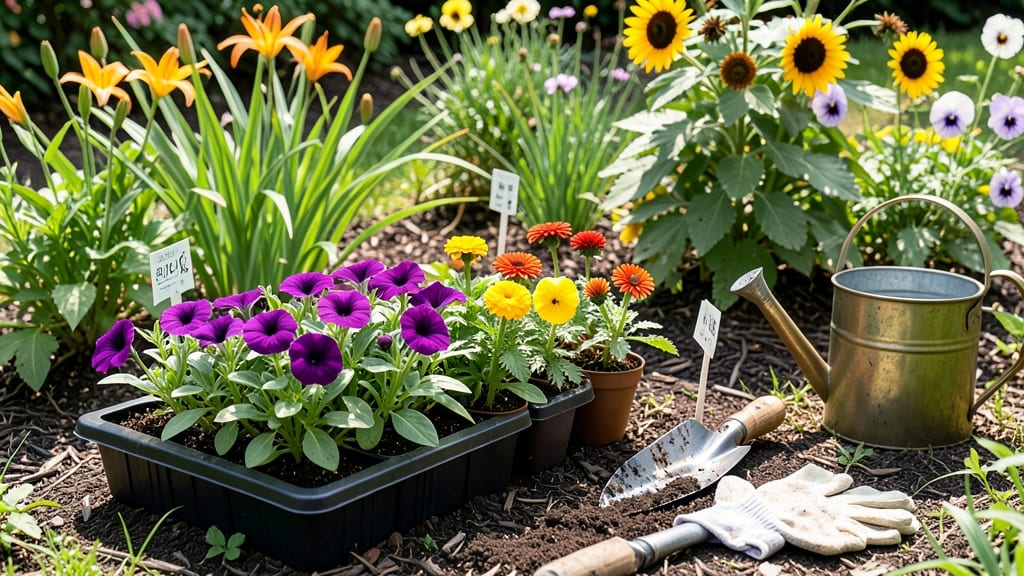
Timing your flower planting in Ohio isn’t just about the calendar—it’s about avoiding frost while catching that perfect window for vibrant blooms.
With last frosts creeping in around April 15 and first frosts arriving by October 15, knowing the exact months to plant your 🌸 can mean the difference between a showstopping garden and a sad, wilted disappointment.
Whether you’re dreaming of annuals like marigolds or perennials like coneflowers, getting the timing right is the key to a thriving garden. Ohio’s Zone 6a climate gives you two main planting seasons—spring and fall—but each variety has its own ideal window.
Let’s break down exactly when to plant for bold, frost-free blooms that’ll make your neighbors green with envy.
Spring planting kicks off in mid-April once soil warms to 60°F, but some cold-hardy flowers can go in even earlier. Fall planting, meanwhile, wraps up by early September to give roots time to establish before winter.
I’ll show you how to align your planting schedule with Ohio’s microclimates, whether you’re in a backyard, container, or raised bed.
Ready to transform your garden into a year-round spectacle? You’ll discover exact month-by-month guidelines for annuals, perennials, and bulbs—plus pro tips to extend your blooming season. Let’s get those flowers in the ground at the perfect time!
Ohio flower planting calendar by hardiness zone: exact months for annuals, perennials & bulbs
Ohio’s USDA Zones 5-7 create a unique challenge for gardeners—cool springs, hot summers, and early frosts demand precision. The average last frost date hovers around April 15 in most regions, but northern areas like Cleveland may wait until May 1.
Southern Ohio (e.g., Cincinnati) can plant 2-3 weeks earlier. Always check your local microclimate—valleys freeze faster than hillsides!
For annual flowers, wait until soil reaches 60°F (15°C) and nighttime temps stay above 50°F (10°C). Perennials and spring-blooming bulbs (like tulips) can go in as early as March in southern Ohio or April in the north, but mulch heavily to protect roots.
Fall planting for perennials runs from late August to early September—just before the first frost.
🌱 PRO TIP: Use row covers or cold frames to plant 4-6 weeks earlier in spring. This trick works especially well for cool-season annuals like pansies or snapdragons.
🌿 VISUAL GUIDE: Below is a side-by-side planting schedule for Ohio’s most popular flowers, organized by hardiness zone and plant type. Use this as your go-to reference before grabbing seeds or seedlings!
| Plant Type | Zone 5 (North) | Zone 6 (Central) | Zone 7 (South) | Notes |
|---|---|---|---|---|
| Annuals (Heat-Loving) | May 15–June 1 | April 20–May 10 | April 1–April 15 | Marigolds, zinnias, sunflowers. Wait for soil >60°F. |
| Annuals (Cool-Season) | March 15–April 15 | March 1–April 1 | February 20–March 15 | Pansies, snapdragons, sweet alyssum. Use row covers for frost protection. |
| Perennials (Spring) | April 1–April 30 | March 15–April 15 | March 1–March 31 | Coneflowers, black-eyed Susans, daylilies. Divide clumps every 2–3 years. |
| Perennials (Fall) | August 20–September 10 | August 15–September 5 | August 1–August 15 | Chrysanthemums, asters, Russian sage. Plant 6–8 weeks before first frost. |
| Bulbs (Spring-Blooming) | October 1–November 15 | September 15–October 30 | September 1–October 15 | Tulips, daffodils, hyacinths. Plant 6" deep in well-draining soil. |
| Bulbs (Fall-Blooming) | March 1–April 15 | February 20–March 30 | February 1–March 15 | Crocuses, alliums, grape hyacinths. Bloom early before summer heat. |
For container gardening, you can push planting dates 1-2 weeks later since pots warm up faster. Fill containers with lightweight potting mix and add slow-release fertilizer at planting time. Petunias and geraniums thrive in pots but need daily watering in Ohio’s summer heat.
If you’re succession planting (like lettuce or radishes), sow every 2 weeks from May through July. This keeps your garden continuously blooming and reduces pests by breaking up monocultures. Marigolds are a great companion plant—interplant them with tomatoes or peppers to deter nematodes!
🌡️ SOIL TEMP CHECK: Use a soil thermometer to confirm readiness. Most flowers need 55–65°F soil.
How to extend your Ohio flower season: cold-hardy varieties & frost protection hacks
Ohio’s short growing season doesn’t mean you’re stuck with blooms for just a few months. By choosing cold-hardy varieties and using clever frost protection, you can enjoy vibrant flowers from early spring to late fall.
I’ve tested these strategies in my own garden, and they’ve added 6+ extra weeks of color to my beds—no green thumb required!
Start with early spring bloomers like pansies and sweet alyssum, which can handle light frosts down to 20°F.
These tough little plants will pop up as soon as the snow melts, giving you color even in March if you plant them in late September or early October of the previous year.
For late-season extensions, focus on chrysanthemums and asters, which thrive in cooler fall temps. Plant them in late August to give roots time to establish before the first frost.
A little mulch or frost cloth can push their blooming window even later—trust me, my neighbors were jealous when my garden stayed lively until mid-November!
Plant: Late Sept–Oct
Blooms: March–May
Plant: Sept–Oct
Blooms: April–June
Plant: Early Sept
Blooms: May–July
Plant: Late Aug
Blooms: Sept–Nov
Plant: Early April
Blooms: May–Frost
Plant: Late Aug
Blooms: Oct–Dec
Don’t overlook DIY frost protection—it’s your secret weapon for late-season blooms. A simple row cover or old bedsheet draped over tender plants can raise temps by 5–10°F, shielding them from light frosts.
I’ve used plastic milk jugs (cut in half) as mini greenhouses for young seedlings, and they’ve saved countless marigolds and zinnias from early spring chills.
For heat-tolerant varieties, swap out heat-sensitive annuals like impatiens with celosia, zinnia, or portulaca. These thrive in Ohio’s summer swelter and keep blooming until the first frost.
Pair them with deep watering in the morning to keep roots cool—my celosia plants hit 3 feet tall by August with this trick!
Pro tip: Use a weekly planting schedule to stagger blooms. Plant one batch of annuals every 2–3 weeks from April through July. This ensures your garden stays in continuous bloom from spring to fall, with no gaps.
It’s like having a nonstop flower show—and the best part? You control the timing!