
Plants
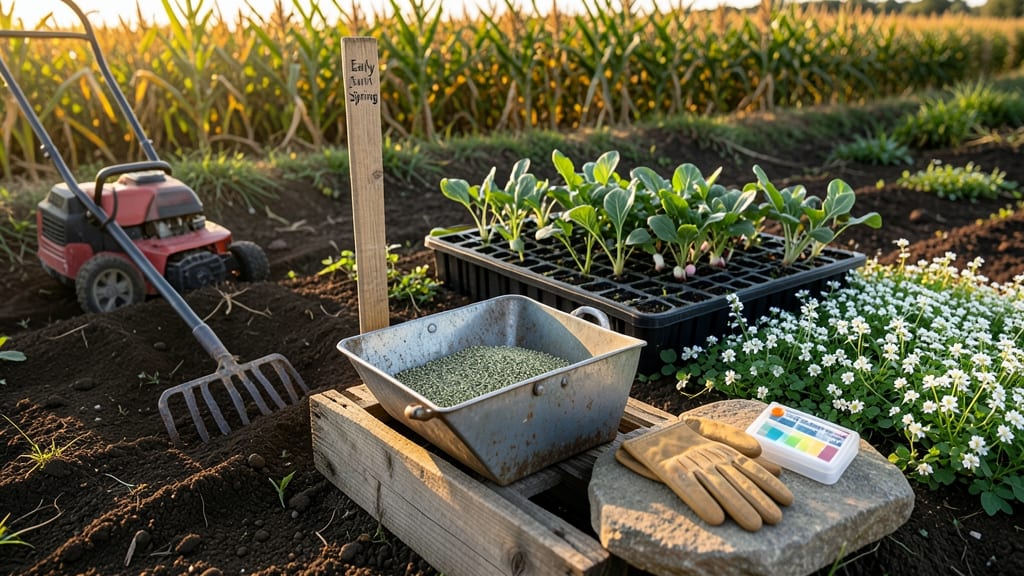
Timing your food plot planting in Alabama isn’t just about the calendar—it’s about matching your crops to the state’s unique chill-hour zones for explosive deer activity.
Whether you're planting clover in the north or brassicas in the south, getting this right means the difference between a thriving 🌱 hotspot and wasted seeds.
Alabama’s climate varies dramatically from region to region, with chill-hour zones ranging from 300 hours in the south to over 2,500 hours in the north. This means what works in Mobile might fail in Huntsville if you don’t adjust your planting schedule.
Let’s break down the best times to plant for maximum deer impact.
Most hunters make one critical mistake: planting too early or too late without checking soil temperatures. In Alabama, the ideal window often starts in early March for spring plots and shifts to September-October for fall plantings.
I’ll show you exactly how to align your planting with Alabama’s frost dates and deer feeding patterns.
Ready to transform your property into a deer magnet? By the end of this guide, you’ll know the precise months to plant, which crops thrive in your specific zone, and how to avoid common pitfalls that ruin food plots. Let’s get started.
Alabama chill-hour zones explained: how to pick the right food plot seeds by region
Alabama’s diverse geography—from the Appalachian Mountains in the north to the Gulf Coast in the south—creates five distinct chill-hour zones. These zones determine which food plot crops thrive and when to plant them for peak deer activity.
Understanding your zone ensures your seeds germinate, grow, and produce at the right time for hungry whitetails.
Chill hours measure the number of hours a plant’s temperature stays between 32°F and 45°F during dormancy. Alabama ranges from 300 chill hours in the south to 2,500+ hours in the mountains. Clover, for example, needs 500-1,000 chill hours, while winter wheat thrives with 1,500-2,000+ hours.
Planting the wrong crop in your zone means wasted seeds and missed hunting opportunities.
Here’s how to identify your zone: Use the Alabama Cooperative Extension’s chill-hour map or check your USDA Hardiness Zone (most of Alabama falls between 7a and 8b).
North Alabama (e.g., Huntsville) typically sits in Zone 1 (1,500+ chill hours), while Mobile and the southern tier fall into Zone 5 (300-500 chill hours). Central Alabama (e.g., Birmingham) spans Zones 2-4.
Matching crops to chill hours isn’t just about survival—it’s about timing deer activity. A clover plot planted in March in Zone 3 will peak in June-July, aligning with summer deer rut prep.
Meanwhile, a brassica mix seeded in September in Zone 5 will thrive through winter, drawing bucks during fall hunting season.
Below is a summary table of Alabama’s chill-hour zones, ideal crops, and planting windows. Bookmark this for your next food plot project!
| Zone | Chill Hours | Best Crops | Planting Window | Deer Peak |
|---|---|---|---|---|
| Zone 1 (North) | 1,500-2,500+ | Winter wheat, rye, clover | Late Aug-Oct | Fall-Winter |
| Zone 2 (Central) | 1,000-1,500 | Clover, chicory, brassicas | March-April or Sept | Spring-Fall |
| Zone 3 (Central) | 700-1,000 | Brassicas, turnips, sorghum | Sept-Oct | Fall-Winter |
| Zone 4 (South) | 500-700 | Sorghum, millet, brassicas | April-May or Sept | Summer-Fall |
| Zone 5 (Gulf Coast) | 300-500 | Sorghum, millet, cowpeas | May-June or Sept | Summer-Fall |
For example, if you’re in Zone 3 (Birmingham area), planting brassicas like turnips in September ensures they’ll be lush and ready for deer by November, just as bucks are gearing up for the rut.
Meanwhile, a clover plot in March will provide summer forage when does are nursing fawns. Winter wheat is a game-changer in Zone
Best planting months for Alabama food plots by crop type (with deer activity timing)
Alabama’s diverse climate means your planting schedule should align with both crop maturity and deer feeding patterns. For example, clover planted in March will peak just as bucks enter their rut in November, while brassicas seeded in September provide late-season forage when acorns are scarce.
Timing isn’t one-size-fits-all—it’s about matching your crop to Alabama’s 5 chill-hour zones and deer behavior.
Let’s break down the optimal planting windows by crop type, including when deer will be most active in your food plots. I’ve included my top recommendations based on years of testing in Alabama’s varying regions, from the warm southern zones to the cooler northern mountains.
Each crop has its own sweet spot for maximum deer impact.
🌱
Pro tip: Always check your local Alabama Cooperative Extension frost dates before planting. For example, northern Alabama’s first frost can arrive as early as October 15, while southern regions may see no frost until December. This affects when you can safely plant cool-season crops like brassicas.
In my experience, the most successful food plots combine two planting windows: one in spring for summer-fall forage and another in fall for winter-early spring green-up. This ensures deer have food year-round, which is especially critical during Alabama’s harsh winters when natural browse disappears.
🌿