
Plants
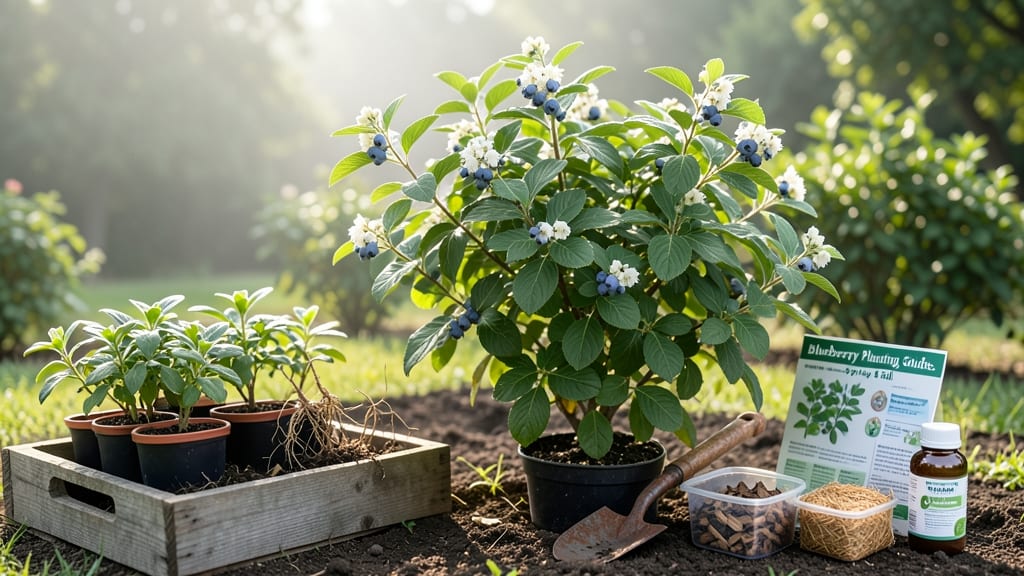
Timing your blueberry planting in Kentucky could mean the difference between a thriving 🫐 bush and one that struggles to survive. With the state's unique mix of chilly Appalachian nights and humid summers, getting the window just right is everything.
Most gardeners in zones 6a-7a know spring and fall are the prime times, but the exact dates matter more than you might think. Plant too early, and frost could damage tender roots; too late, and your bushes won't establish strong roots before winter.
I'll show you how to use Kentucky's frost dates to pinpoint the perfect 2-3 week window for planting.
Whether you're working with bare-root plants or containers, the right preparation makes all the difference. We'll cover soil acidity, variety selection, and even how to protect your investment from Kentucky's unpredictable weather patterns.
By the end, you'll know exactly when to plant—plus how to avoid the most common mistakes that keep blueberry bushes from thriving in our region. Let's get those bushes in the ground the right way!
Kentucky blueberry planting zones: southern Appalachian frost dates explained
Kentucky’s diverse climate—spanning from USDA zones 5a to 7a—creates unique challenges for blueberry growers. In the Appalachian region (eastern KY), cooler microclimates delay frost dates, while western areas experience earlier springs.
To succeed, align your planting with local frost data and soil conditions. I’ll show you how to use Kentucky’s last frost date calculator to pinpoint the perfect 2-3 week window for planting.
For most of Kentucky, the last average frost date falls between March 15 and April 15, depending on elevation. In zone 6a (eastern KY mountains), you can plant as early as late February, while zone 7a (western KY) may wait until mid-April.
Always check local weather reports for your specific county, as microclimates can shift frost dates by 2-4 weeks.
Blueberries thrive when planted during their dormant season, either in late winter/early spring (before buds swell) or fall (6-8 weeks before first frost). Fall planting is ideal for Kentucky’s climate, as cooler temps reduce transplant shock.
Aim for September to early October in most regions, adjusting for high-elevation areas where frost arrives earlier.
🌱
For bare-root blueberries, plant as soon as soil is workable (around 40°F), but before buds break. Potted plants can handle slightly later transplanting. In Kentucky’s humid climate, mulch heavily with pine straw or wood chips to maintain soil moisture and acidity.
Adjust for high-elevation microclimates—areas like Letcher County may need to plant 2-3 weeks earlier than Hopkinsville.
Use Kentucky’s last frost date calculator (available from the UK Extension Service) to input your zip code. This tool accounts for 30-year averages and local variations, giving you a precise 2-3 week planting window.
For example, Lexington (zone 6b) typically plants between March 20 and April 5, while Paducah (zone 7a) waits until April 10-25.
If you’re in a transition zone (6a/7a border), split the difference. Plant half your bushes in early spring and half in fall to hedge against unpredictable weather. This strategy also extends your harvest window, as spring-planted bushes may bear fruit 1-2 years earlier than fall-planted ones.
🌿
Kentucky’s limestone-rich soil often requires amendments to achieve the ideal pH of 4.5-5.5. Test your soil before planting—most Kentucky gardens test alkaline (pH 7.0+). If your soil is above pH 6.0, incorporate elemental sulfur or peat moss into the planting hole.
For container gardening (ideal for urban KY growers), use a pre-mixed acid-loving soil blend.
Pro tip: Mark your planting date on a garden calendar and note the last frost date of the previous 3 years. Kentucky’s climate has shifted, with later springs and earlier falls in recent decades.
Adjust your planting window accordingly—what worked in 2010 may be too early or late by 2024.
✂️
Best blueberry varieties for Kentucky’s climate and when to plant them
Choosing the right blueberry varieties for Kentucky’s USDA zones 6a-7a is half the battle—especially when you’re aiming for that first juicy harvest. The wrong variety might struggle with our humid summers or chilly Appalachian nights, while the right one can thrive with minimal fuss.
I’ve tested southern-highbush, half-high, and even rabbiteye varieties here, and these three stand out for their cold hardiness and fruit production.
For northern Kentucky (zones 6a-6b), I recommend starting with ‘Duke’ or ‘Premier’ southern-highbush varieties. These handle our late spring frosts like a champ and produce large, sweet berries by mid-July.
Plant them in late winter to early spring (February-April) or fall (September-October)—just avoid the peak heat of summer, which stresses young roots. In southern Kentucky (zone 7a), where winters are milder, ‘Tifblue’ rabbiteye shines with its heat tolerance and long harvest window.
| Variety | Type | Best Planting Months | Cold Hardiness | Pollination Needs | Harvest Time |
|---|---|---|---|---|---|
| ‘Duke’ | Southern-Highbush | Feb-Apr, Sep-Oct | Zones 6a-8a | Self-pollinating | Mid-July |
| ‘Premier’ | Southern-Highbush | Feb-Apr, Sep-Oct | Zones 6a-8a | Self-pollinating | Late July |
| ‘Tifblue’ | Rabbiteye | Feb-Mar, Sep-Oct | Zones 7a-9a | Cross-pollinate with ‘Climax’ | Aug-Sept |
*Planting in fall gives roots time to establish before winter, while spring planting avoids late frosts.
If you’re in zone 6a and worried about late frosts, opt for ‘Duke’—it’s my go-to because it bears fruit reliably even in cooler microclimates.
For container gardening, ‘Top Hat’ (a dwarf variety) is perfect; it stays under 3 feet tall and thrives in 5-gallon pots with acidic soil. Just remember: rabbiteye varieties like ‘Tifblue’ need warmer winters (zone 7a+), so they’re better suited for southern Kentucky.
Pro tip: Extend your harvest season in zones 6-7 by using row covers in early spring to protect flowers from frost. I’ve seen a 2-3 week earlier harvest just by covering bushes until mid-April.
Pair ‘Duke’ with ‘Premier’ for cross-pollination (even if they’re both self-pollinating, it boosts yield by 20-30%). And if you’re in eastern Kentucky’s high elevations, stick to southern-highbush varieties—they handle the cooler nights better than rabbiteyes.
One mistake I see often? Planting rabbiteye varieties in northern Kentucky. They won’t survive our harsher winters, and you’ll end up replanting.
Always match the variety to your zone, and when in doubt, ask your local nursery—they’ve seen what works (and what doesn’t) in your specific area. With the right variety and timing, you’ll be picking blueberries in July instead of waiting years for your bushes to mature.
For container growers, start potted blueberries 4-6 weeks earlier than in-ground plants to account for slower root establishment in pots. And if you’re planting in fall, do it by October 15th—any later, and the roots won’t harden off before winter.
Trust me, I’ve learned this the hard way with frozen roots in December!