
Companion Plants
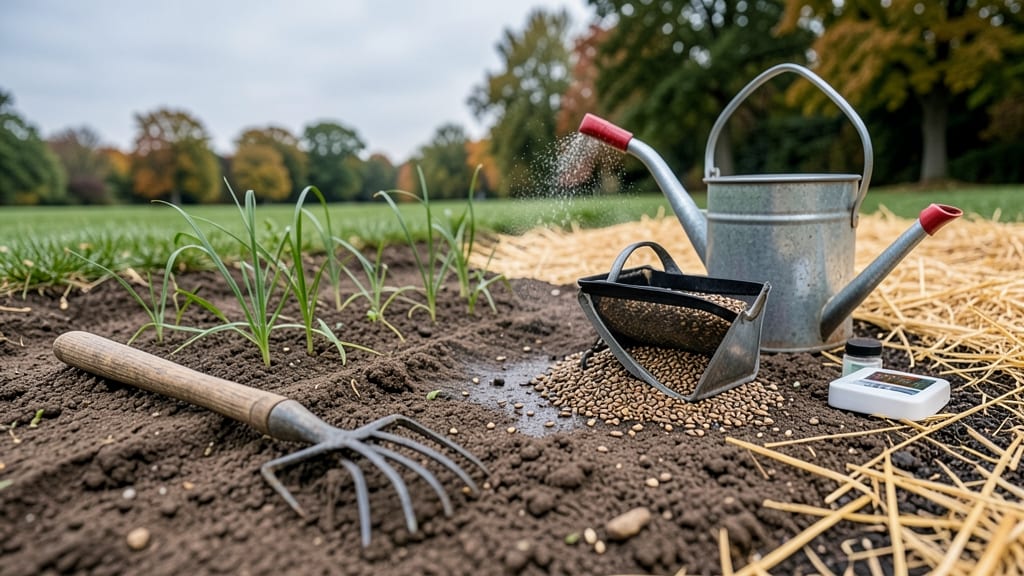
Timing your fall grass seed planting just right can mean the difference between a lush, green lawn come spring and a patchy, struggling yard.
The secret lies in understanding your local frost-free window—typically 4-6 weeks before the first frost—which for most of the U.S. falls between late August and early October.
Planting grass seed 🌱 in fall offers cooler temperatures, fewer weeds, and ideal conditions for root establishment before winter sets in. But getting the timing wrong can leave your seeds vulnerable to frost or drought.
I’ll break down exactly how to calculate your perfect planting window, including soil temperature tips and regional adjustments.
Whether you’re in USDA Zone 6a or another climate, knowing when to plant grass seed ensures your lawn thrives year-round. Let’s dive into the science behind fall planting and how to avoid common mistakes that waste seeds and money.
From soil prep to post-planting care, I’ll walk you through every step to help you plant grass seed at the perfect time—so you can enjoy a vibrant lawn next season without the guesswork.
Ideal soil temperature ranges for fall grass seed planting
Fall planting works because cooler temperatures reduce seed stress and weed competition. But timing depends on your grass type and soil temperature. Cool-season grasses (like fescue or bluegrass) thrive when soil is between 60-75°F, while warm-season grasses (like Bermuda) need 55-65°F to germinate.
Check your seed packet—it’s your best guide!
Most gardeners aim to plant 4-6 weeks before first frost, but soil temps matter more than calendar dates. For example, in USDA Zone 6a, early September often hits that sweet spot, while Zone 8a might wait until October.
Use a soil thermometer ($10 at garden centers) to test 2-3 inches deep—this is where seeds will sprout.
Here’s why soil temperature matters: Seeds need warmth to activate enzymes for germination, but too much heat (above 80°F) can dry them out. Cooler nights in fall slow evaporation, keeping seeds moist longer.
Pro tip: If your soil is above 80°F, wait a week or two—your seeds will thank you with faster, stronger growth.
Microclimates complicate things. A south-facing slope warms faster than a north-facing yard. Shade from trees can delay soil cooling. Test multiple spots in your lawn—you might find a 3-5°F difference between areas just 10 feet apart. Adjust your planting date based on the coolest spots.
Don’t rely on air temperature alone. A 75°F afternoon might feel perfect, but soil could still be 85°F from yesterday’s heat. Early morning (before 9 AM) is the best time to check soil temps—it’s when readings are most stable.
If your soil is below 55°F, germination will stall. Patience here saves you from wasted seed.
If your soil is too hot, try these tricks to cool it down: Water deeply the day before testing (moist soil reads 5°F cooler than dry soil), or shade the area with a lightweight tarp for 24 hours.
Avoid planting on concrete or asphalt areas—they stay scorching long after air temps drop. Instead, focus on organic soil where moisture and temps regulate naturally.
Overwatering after planting can cause seed rot, while underwatering leads to dormancy. Aim for 1 inch of water per week (including rain), split into two waterings.
Use a rain gauge or tuna can to measure—your sprinkler might be over- or under-delivering. Early morning watering (before 10 AM) minimizes evaporation and fungal risks.
Fall’s shorter days mean less sunlight for seedling growth. If your grass starts looking leggy or pale, it’s not getting enough light. Thin out nearby weeds or prune overhanging branches to let 6+ hours of sunlight reach new shoots.
A south-facing slope is ideal—it captures warmth longer each day. If your yard is shady, choose shade-tolerant grasses like fine fescue.
Remember: The goal is root establishment before dormancy. Grass planted too late may not develop deep roots before frost, leaving it vulnerable to winter kill or spring weeds.
Use a seed starter fertilizer (high in phosphorus) to boost root growth in those critical first 3-4 weeks. Your lawn’s long-term health starts with smart fall timing.
How to calculate your local frost-free window for fall planting
Determining your local frost-free window is the key to successful fall grass seed planting. The ideal time is 4-6 weeks before your first frost date, giving seeds time to germinate and establish roots before winter dormancy. But how do you find this exact window for your area?
Start by checking your USDA hardiness zone—most grass seeds specify planting windows based on these zones. For example, in Zone 6a, aim for late August to early October. Use the USDA Plant Hardiness Zone Map to confirm your zone, then cross-reference with seed packet guidelines.
Next, find your average first frost date using the National Oceanic and Atmospheric Administration (NOAA) frost calculator or local weather stations. Subtract 6 weeks from this date to pinpoint your last planting window. For instance, if frost hits October 15, plant by September 1.
🌱 Pro Tip: Seed packets often include a planting chart with regional frost dates—use this as a backup. For example, tall fescue seeds may recommend planting between August 15 and September 30 in most U.S. regions.
Use the USDA Zone Map to identify your zone (e.g., Zone 6a). Most seed packets list planting windows by zone.
Check NOAA’s Frost Calculator or local weather data for your area’s average first frost date (e.g., October 15 in Zone 6a).
Subtract 6 weeks from your frost date. For October 15, plant by September 1 to ensure roots establish before cold sets in.
If your yard is in a warmer microclimate (e.g., near a building), extend your window by 1-2 weeks. Cooler spots may need earlier planting.
Cross-check your calculated window with the seed packet’s planting chart. Some varieties (like cool-season grasses) thrive in slightly later windows.
Don’t forget to account for microclimates in your yard. A south-facing slope may stay warmer longer, while a low-lying area could frost earlier. Test your soil temperature with a soil thermometer—ideal temps for fall planting are 60-75°F for most grass types.
Once you’ve nailed down your window, mark your calendar and prepare your soil. The 6-week buffer ensures your grass has time to germinate, grow roots, and withstand light frosts before winter dormancy.
With this method, you’ll avoid the #1 mistake of planting too close to frost—leaving seeds vulnerable to cold and failure.