
How To
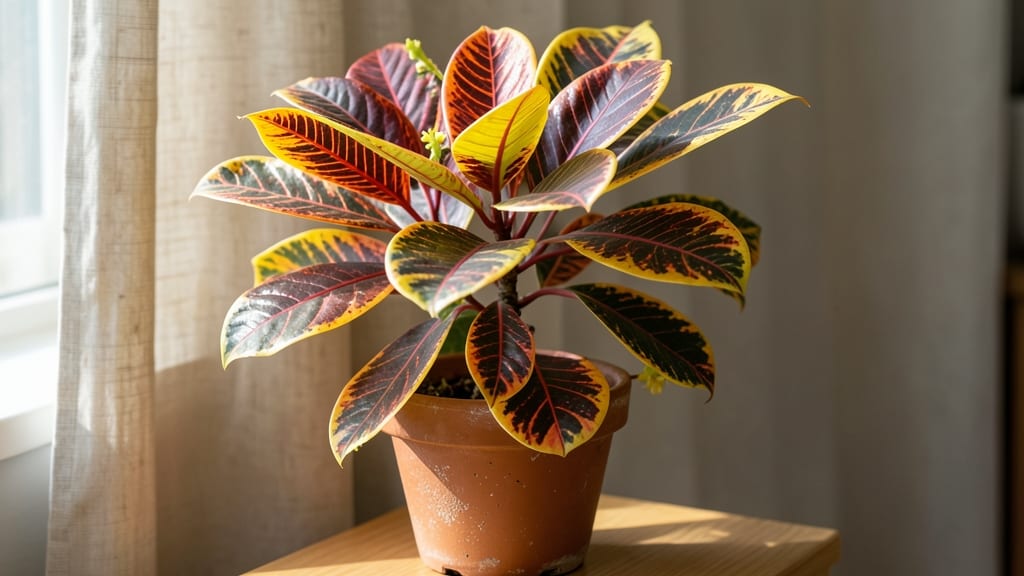
If your croton plant’s 🌿 leaves are losing their vibrant colors or drooping faster than you’d like, you’re probably dealing with how much light does a croton plant need—specifically, the wrong balance.
The exact amount of light a croton needs—bright indirect sunlight—can make or break its health, and getting it wrong might explain why your plant looks stressed.
Most people assume crotons thrive in direct sun, but too much harsh light can actually bleach those stunning foliage colors. The key is finding that sweet spot where your plant gets enough brightness to stay lively without getting sunburned.
I’ll show you exactly how to spot the signs of over- or under-lighting and adjust your setup—whether you’re working with a sunny windowsill or artificial grow lights.
Whether you’re dealing with a leggy croton reaching for more light or leaves that look sad and pale, the solution often comes down to placement. East-facing windows offer gentle morning sun, while west-facing spots provide afternoon glow without the intensity.
Let’s break down the perfect light conditions to keep your croton thriving year-round, no matter where you live in USDA Zone 6a.
Ready to transform your croton from struggling to stunning? You’ll learn how to rotate your plant for even growth, recognize the early warning signs of light stress, and even troubleshoot common mistakes like placing it too close to a south-facing window. Let’s get your croton the light it truly craves!

Croton plant light requirements: the perfect balance of bright indirect sunlight
Your croton plant thrives on bright indirect sunlight, making it the secret weapon for vibrant foliage. Unlike sun-worshipers, crotons hate harsh midday rays that can scorch their leaves. Think of it as a morning coffee lover—they crave sunlight but prefer it gentle and filtered.
In nature, crotons grow under dappled shade in tropical forests, where sunlight filters through leaves. Recreating this environment indoors means placing your plant near east or west-facing windows, where morning or late afternoon light dominates.
A south-facing window can work, but you’ll need to filter the light with sheer curtains.
Here’s the golden rule: 6+ hours of bright indirect light daily. This ensures your croton’s leaves maintain their stunning colors and grow lush. Too little light? Those fiery hues fade to dull green. Too much? Watch for crispy brown edges. The balance is everything!
| Light Condition | Ideal Scenario | Effects on Croton |
|---|---|---|
| Bright Indirect Light | East/west window, 3-6 ft away | Vibrant colors, healthy growth |
| Direct Morning Sun | 2-3 hours max (east window) | Tolerated; no leaf burn |
| Harsh Afternoon Sun | Avoid after 12 PM | Brown leaf edges, wilting |
| Low Light (North Window) | Supplement with grow lights | Leggy growth, pale leaves |
Seasonal shifts matter too. In summer, when sunlight is intense, move your croton 5-6 feet back from the window or use a light sheer curtain. In winter, when days shorten, supplement with a grow light for 12-14 hours daily to maintain its energy.
Outdoor crotons? They love partial shade—think 30-50% shade cloth during peak sun hours. A spot under a tree canopy or near a building’s east side is perfect. Just avoid full sun, which can bleach the leaves and stress the plant.
Pro tip: Rotate your croton quarterly to ensure even light exposure. Plants lean toward their light source, and this simple trick keeps them symmetrical and sturdy. Watch how the leaves respond—if they’re stretching toward the light, it’s a cry for more brightness.
Your croton’s leaf color intensity is a direct reflection of its light happiness. Deep reds, oranges, and yellows thrive with consistent bright indirect light. If you notice colors fading to washed-out green, it’s time to adjust its spot. Think of it as a mood ring for your plant!
For indoor growers, artificial light can be a game-changer. LED grow lights with a 5000-6500K color temperature mimic natural sunlight perfectly. Place the light 12-18 inches above the plant and keep it on for 12-14 hours daily to replicate a full day cycle.
Remember: Consistency is key. Sudden changes in light can shock your croton, causing leaf drop or stunted growth. Gradual adjustments—like moving it a few inches closer to the window over a week—help it adapt smoothly. Your patience will pay off with showstopping foliage all year round!
Croton plant light requirements: the perfect balance of bright indirect sunlight
Your croton plant thrives on bright indirect sunlight, which is often misunderstood. Unlike sun-loving succulents, crotons need enough light to maintain their vibrant foliage colors but can’t handle harsh midday rays that cause leaf bleaching.
The ideal setup mimics dappled sunlight under a canopy, where your plant gets 6+ hours of filtered light daily without direct exposure.
The key is positioning your croton within 3-6 feet of an east or west-facing window. East windows provide gentle morning sun, while west windows offer afternoon light without the intensity.
South-facing windows can work, but you’ll need to filter the light with sheer curtains or place the plant further back to avoid sunburn.
🌿 Seasonal adjustments are crucial. During summer months, when sunlight is most intense, move your croton slightly away from windows or use a light sheer curtain to diffuse the rays.
In winter, when natural light dims, supplement with a grow light for 12-14 hours daily to prevent leggy growth and faded colors.
Outdoor crotons in USDA Zone 6a need protection from midday summer sun. Use a 30-50% shade cloth during peak hours (11 AM–3 PM) to prevent leaf damage. Morning and late afternoon sun are perfect for outdoor plants, allowing them to develop their signature colorful foliage without stress.
If you notice your croton’s leaves turning yellow or brown at the edges, it’s a clear sign of too much direct light. Move it to a shadier spot immediately.
Conversely, if leaves appear pale and stretched, it’s reaching for more light—rotate the pot quarter-turn weekly to ensure even exposure and prevent lopsided growth.
For indoor growers, LED grow lights with a 5000-6500K color temperature are ideal for supplementing light. Place the light 12-18 inches above the plant and keep it on for 12-14 hours daily to mimic natural daylight cycles. This setup works wonders for crotons in office spaces with limited windows.