
Plants
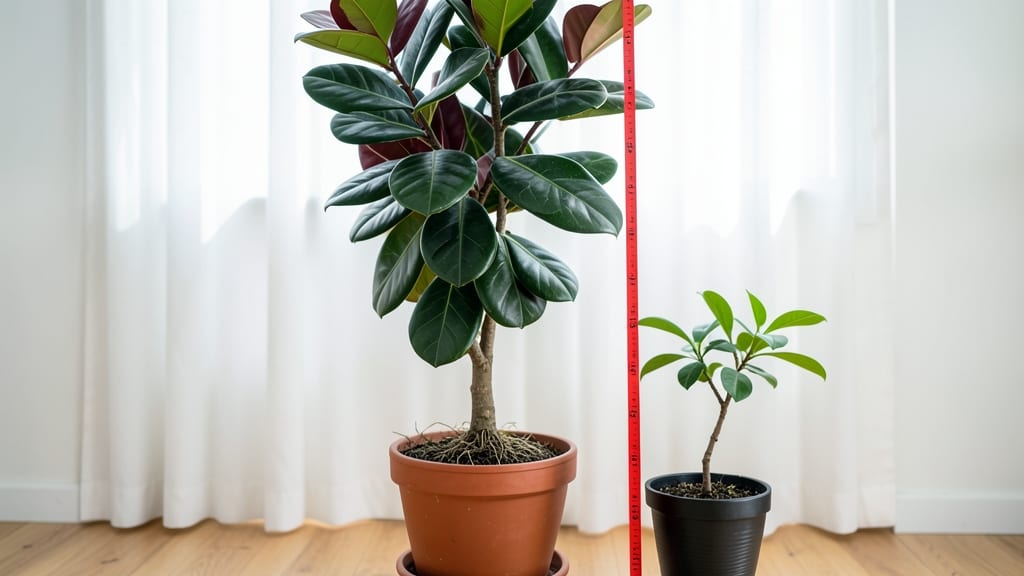
Wondering how tall does a rubber plant grow before it becomes a full-fledged jungle in your living room? This glossy-leaved beauty can reach anywhere from 3 to 10 feet, depending on whether it’s basking in bright light or struggling in a dim corner.
If you’re dreaming of a dramatic floor plant with thick, waxy leaves, you’ll likely see 6 to 10 feet of growth over a few years—especially if you’re growing it outdoors in USDA Zone 6a or giving it plenty of space indoors.
But don’t worry if you prefer a smaller statement piece; with the right pruning and pot size, you can keep it compact and manageable.
What’s the key to controlling its height? Light exposure, pruning, and even training it to grow as a bush instead of a tower. I’ll show you how to shape your rubber plant 🌿 exactly the way you want—whether that’s a towering centerpiece or a neatly trimmed tabletop plant.
Ready to turn your rubber plant into the perfect fit for your space? Let’s break down the factors that influence its growth and how you can guide it to your ideal height—without losing those stunning, deep green leaves.


Average rubber plant height by indoor conditions and varieties
Rubber plants (Ficus elastica) are known for their dramatic growth potential, but their final height depends on variety, light exposure, and pruning habits.
Without intervention, these tropical plants can reach 6–10 feet tall indoors—taller than most ceilings! However, with proper care, you can easily control their size for your space.
Under ideal bright indirect light, rubber plants grow 6–12 inches per year. In low light, growth slows to 3–6 inches annually, but leaves may become smaller.
Varieties like 'Black Prince' and 'Decora' typically stay on the taller side (8–10 ft), while 'Variegata' (with cream stripes) grows slightly slower, often maxing out at 6–8 ft.
Pot size also plays a role—smaller pots stunt growth, while larger containers (12+ inches) encourage taller, leggier stems. If you want a compact rubber plant, choose a 3–4 inch pot and prune regularly. For a floor-filling statement plant, opt for 10+ inch pots and minimal pruning.
Here’s how different conditions affect height:
| Variety | Light Conditions | Mature Height (ft) | Growth Rate (in/yr) |
|---|---|---|---|
| 'Black Prince' | Bright Indirect | 8–10 | 10–12 |
| 'Variegata' | Medium Light | 6–8 | 6–8 |
| 'Decora' | Low to Bright | 5–7 | 4–6 |
| 'Ruby' (Dwarf) | Bright Indirect | 3–5 | 5–7 |
If you’re growing a rubber plant in outdoor conditions (USDA Zones 9–11), expect even faster growth—up to 12–18 inches per year—with heights reaching 10–15 feet if unpruned. Outdoor plants also develop thicker trunks and larger leaves due to increased light and humidity.
For indoor growers, the key to controlling height is pruning. Pinching back the tips of stems encourages bushier growth, while topping (cutting the main stem) forces new branches to form. Even a 3-foot rubber plant can be maintained with regular pruning—just be prepared for rapid regrowth!
Pro tip: If your rubber plant starts to outgrow its space, consider air-layering the top stems to propagate new plants. This technique lets you keep your favorite variety while controlling the parent plant’s height.
🌿
Average rubber plant height by indoor conditions and varieties
Your rubber plant’s final height depends on two key factors: light exposure and cultivar type. Under ideal conditions with bright indirect light, most rubber plants (Ficus elastica) reach 6 to 10 feet tall indoors over 3–5 years.
In dimmer spaces, they’ll max out around 3 to 5 feet—though their leaves may lose that signature glossy sheen.
Outdoors in USDA Zone 6a or warmer, rubber plants can grow even taller—10 to 15 feet—if given enough space and sunlight. However, they’re rarely grown outdoors in colder climates due to frost sensitivity.
For container growth, height is directly tied to pot size: a 10-gallon pot will restrict growth to 3–5 feet, while a 20-gallon pot lets it stretch toward 8–10 feet.
Here’s how different varieties compare in mature height:
| Variety | Indoor Height (ft) | Growth Rate (in/year) | Light Needs |
|---|---|---|---|
| 'Black Prince' | 6–10 | 10–12 | Bright indirect |
| 'Variegata' | 4–8 | 8–10 | Bright indirect |
| 'Burgundy' | 5–9 | 9–11 | Medium light |
| 'White Princess' | 3–6 | 6–8 | Bright indirect |
If you’re growing your rubber plant as a tabletop plant, choose a dwarf variety like 'White Princess' or limit its pot size to 5–7 gallons. For a floor-filling statement plant, opt for 'Black Prince' or 'Burgundy' in a 15–20 gallon pot with east-facing window light.
The slower-growing variegated types (like 'Variegata') stay more compact but require more light to maintain their striking patterns.
Pro tip: Rotate your plant quarterly to ensure even growth. Uneven light exposure can cause lopsided stems and stunted height on one side. A simple spin every few months keeps your rubber plant growing straight and strong—no matter which variety you choose.
For the fastest growth, pair bright indirect light with a balanced fertilizer (10-10-10) applied every 4–6 weeks during spring and summer. Just avoid over-fertilizing, or you’ll end up with leaf burn and slower height gain.
🌿